
Honda & Acura Transmission Repair | Auto Service Experts
Honda & Acura transmission repair is one of the most frequently diagnosed concerns at Auto Service Experts. If your Accord, CR-V, Pilot, Odyssey, Passport, HR-V, Ridgeline, MDX, TLX, or RDX has started slipping, shuddering, hesitating on engagement, or losing drive, the transmission platform in your specific model year determines the cause.
Honda has used several distinct designs — five-speed and six-speed automatics, a ZF-sourced nine-speed, and a CVT — and each has confirmed failure patterns that require a different diagnostic approach. A shudder on a CVT-equipped CR-V has a different root cause than the same symptom on a nine-speed Pilot.
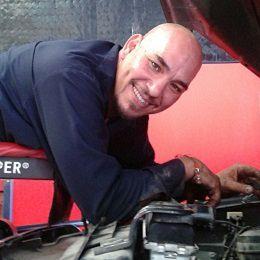
Carlos Rodriguez and our ASE-certified team use Honda and Acura-specific scan tools and live data to confirm the exact fault before any San Antonio transmission repair is recommended.
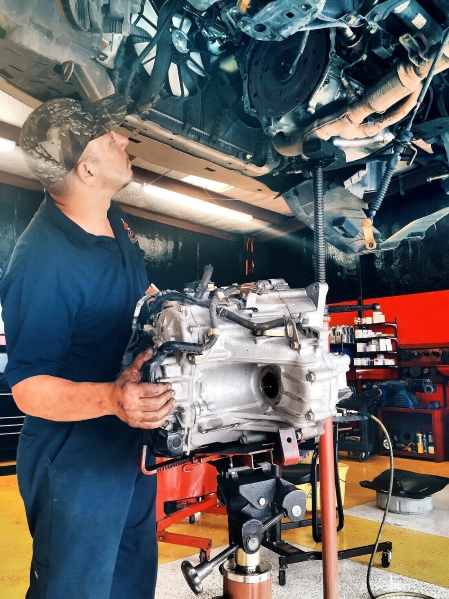
Honda & Acura Transmission- Diagnostic Overview
This page is part of the Make and Model Diagnostic Series at Auto Service Experts in San Antonio and is designed to answer one primary concern: what transmission repair needs are most common in Honda and Acura vehicles, and how are they correctly diagnosed?
Honda transmissions have a well-documented history of platform-specific failure patterns. Honda’s five-speed automatics used in the early 2000s Accord, Odyssey, and Pilot had confirmed third-gear clutch and torque converter failures. The ZF nine-speed automatic introduced in the 2016 Pilot, 2018 Accord, and Acura MDX produced a distinct set of confirmed harsh-shift and software calibration concerns. Honda’s CVT platforms have their own documented fault patterns that require platform-specific diagnosis.
Diagnostic Snapshot
Honda and Acura transmission diagnosis begins with model year and platform identification, full fault code retrieval from the PCM and TCM using Honda HDS or equivalent professional-level scan data, and Honda Genuine ATF fluid condition evaluation. Honda transmissions are highly sensitive to fluid specification — Honda Genuine ATF DW-1 is required on most modern platforms, and substituting generic Dexron or multi-vehicle ATF causes accelerated clutch and solenoid wear that produces symptoms indistinguishable from mechanical failure.
This guide covers the most common Honda and Acura transmission repair needs by platform, which models are affected, and how structured diagnostic testing isolates the exact fault before any repair is recommended.
For complete transmission system coverage, visit our San Antonio Transmission Repair page.
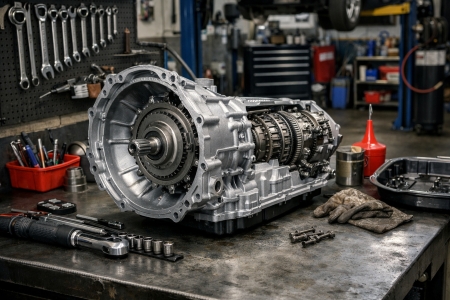
What Honda & Acura Owners Typically Experience
Honda & Acura transmission problems most commonly reported by owners include:
- Transmission slipping or RPM surge during acceleration — frequently reported on older Accord, Odyssey, and Pilot
- Shudder during light acceleration or at highway speed during torque converter lockup
- Harsh, jerky, or unpredictable shifts in lower gears — most commonly reported on ZF nine-speed equipped vehicles
- Delayed engagement from park to drive or park to reverse — reported on CR-V and HR-V CVT platforms
- Check engine light with P0740, P0780, or transmission range codes
- Complete loss of drive on high-mileage units — reported on Odyssey and Pilot
Why Honda & Acura -Specific Diagnosis Matters
Honda transmission platforms differ significantly enough between generations that a diagnostic approach correct for a 2004 Accord is incorrect for a 2019 Accord. The ZF nine-speed introduced in Honda’s newer lineup requires TSB review and software verification before any mechanical diagnosis — many ZF nine-speed concerns are resolved entirely through a TCM calibration updateHonda’s CVT platforms require HDS-level ratio monitoring and fluid condition evaluation before any mechanical repair is recommended. Without platform-specific procedures, accurate diagnosis is not possible.
At Auto Service Experts, every Honda and Acura transmission repair diagnostic begins with platform identification, Honda TSB review, HDS-level fault code retrieval, and ATF condition evaluation before any component testing or repair is recommended.
Common Honda & Acura Transmission Repairs by Platform
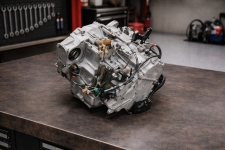
Honda Five-Speed Automatic — Accord, Odyssey, Pilot, CR-V (1999–2010)
Honda’s five-speed automatic transmissions — including the BAXA, MAXA, and BZKA units — have a well-documented history of third-gear clutch failure and torque converter clutch shudder on high-mileage units. Third-gear clutch wear produces slipping specifically during third-gear engagement and was the subject of multiple Honda service bulletins and extended warranty programs. Torque converter shudder on these units is frequently caused by ATF degradation rather than mechanical converter failure. Diagnosis is confirmed through clutch pressure testing, live gear ratio monitoring, and ATF condition inspection before any transmission repair is recommended.
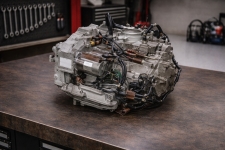
Honda Six-Speed Automatic — Accord V6, Pilot, Ridgeline, Acura TL and MDX (2003–2015)
Honda’s six-speed automatic used in V6 models has confirmed issues with torque converter clutch shudder, solenoid wear, and third and fourth clutch pack degradation at high mileage. The six-speed is also known for valve body wear that causes erratic shift pressure and fluid contamination from clutch pack debris. ATF condition is the first diagnostic evaluation on all six-speed Honda symptoms. Diagnosis is confirmed through live TCC monitoring, solenoid resistance testing, and hydraulic pressure analysis before any transmission repair is recommended.
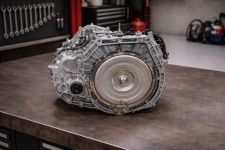
ZF Nine-Speed Automatic — Honda Pilot, Passport, Ridgeline, Accord 2.0T, Acura MDX and TLX (2016–Present)
The ZF-sourced nine-speed is the most frequently diagnosed Honda platform at our shop for shift quality concerns. Confirmed issues include harsh, jerky shifts in lower gears, unpredictable downshifts during deceleration, and hesitation during gear selection. Many ZF nine-speed concerns are resolved entirely through a TCM software calibration update without any mechanical repair. Valve body wear and solenoid faults are confirmed in higher-mileage units. Diagnosis is confirmed through TSB review, HDS software version verification, and live shift data before any transmission repair is recommended.
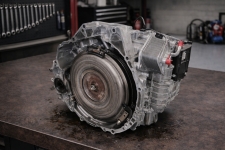
Honda CVT — CR-V, HR-V, Fit, Insight (2015–Present)
Honda’s CVT platform used in its smaller crossovers and fuel-efficient models has confirmed issues including shudder during low-speed acceleration, belt slip under hard acceleration, and ratio control faults producing hesitation. Honda CVT symptoms are first evaluated for fluid condition — Honda Genuine CVT fluid is required, and substituting generic CVT fluid causes rapid belt and solenoid damage. Diagnosis is confirmed through HDS live ratio monitoring, belt slip data, and CVT fluid condition inspection before any transmission repair is recommended.
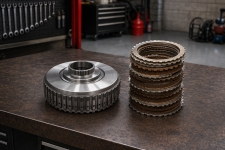
Honda Automatic — Older CR-V, Element, and Civic (2002–2011)
Honda’s four-speed and five-speed automatics used in smaller models have confirmed issues with solenoid wear, clutch pack degradation, and torque converter clutch shudder at high mileage. ATF degradation from infrequent service is a primary contributing factor on all older Honda platforms. Diagnosis is confirmed through solenoid resistance testing, clutch pressure evaluation, and ATF condition inspection before any transmission repair is recommended.
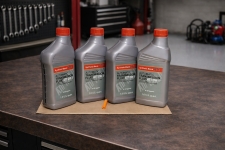
High-Mileage Wear Across All Honda and Acura Platforms
Honda and Acura transmissions across all platforms show consistent patterns of clutch pack wear, solenoid linear pressure valve degradation, and torque converter clutch friction material failure beyond 120,000–150,000 miles — particularly when Honda Genuine ATF DW-1 has not been used or service intervals have been extended. Diagnosis is confirmed through hydraulic pressure testing and live clutch pressure data before any transmission repair is recommended.
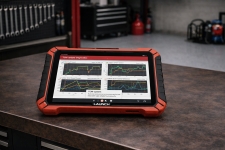
Honda & Acura | ZF Nine-Speed | Harsh Shifting
Owner reported harsh, jerky shifts in lower gears on a 2017 Pilot. Previous shop quoted a valve body replacement. TSB review identified an open TCM software calibration update for shift quality. HDS software version confirmed the update had never been applied. Calibration update performed. Shift quality returned to normal. No parts replaced. No mechanical repair required.
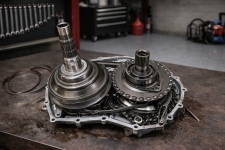
Honda | CVT | Low-Speed Shudder
Owner reported a shudder during low-speed acceleration on a 2018 CR-V. Fluid condition inspection revealed non-Honda CVT fluid — generic multi-vehicle fluid had been installed at a quick-lube shop. HDS live ratio monitoring confirmed belt slip consistent with fluid incompatibility. No mechanical damage confirmed. Full CVT fluid service with Honda Genuine CVT fluid. Shudder resolved. No further repair required.
Professional Diagnostic Process for Honda & Acura Transmissions
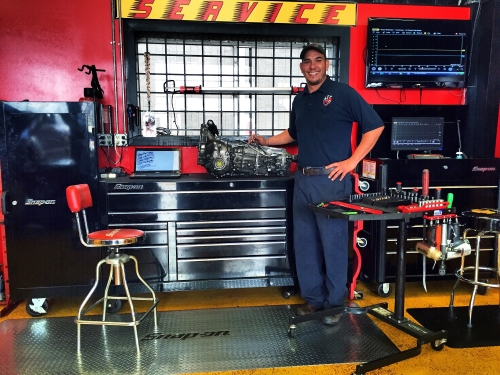
Our ASE CodeLogic diagnostic workflow for Honda and Acura transmissions includes:
Verified Honda & Acura Diagnostic Protocol
- Identify vehicle model year, engine, and transmission platform before any testing begins
- Inspect Honda Genuine ATF level, color, odor, and condition as the first diagnostic step
- Review applicable Honda and Acura Technical Service Bulletins for the identified platform
- Retrieve all stored and pending fault codes using HDS-level scan tool data
- Review freeze-frame and clutch pressure data
- Perform live hydraulic clutch pressure or CVT ratio monitoring appropriate to the platform
- Conduct a road test with live TCC command, shift quality, and solenoid data monitored simultaneously
- Verify current TCM software calibration and apply Honda TSB update if applicable
- Confirm repair with final road test, system scan, and ATF condition recheck
This structured approach ensures Honda and Acura-specific faults are correctly identified and that ATF service and software updates resolve the concern whenever possible before any transmission repair is performed..
Honda & Acura Models Commonly Serviced
The following Honda & Acura vehicles are among the most frequently diagnosed for transmission concerns at our San Antonio shop:
Each vehicle is diagnosed using model-year and platform-specific procedures before any repair is recommended.
Honda Accord (1999–Present)
Older Accord models with the five-speed have confirmed third-gear clutch and TCC shudder histories. Accord V6 models with the six-speed have confirmed solenoid and TCC wear patterns. The 2018-forward Accord 2.0T uses the ZF nine-speed — shift quality TSBs apply to these models.
Honda Pilot (2003–Present)
The Pilot uses Honda’s five-speed and six-speed automatics through 2015 and the ZF nine-speed from 2016 forward. Third-gear clutch failures on older units and ZF shift quality concerns on newer units are the most commonly confirmed faults.
Honda Odyssey (2002–Present)
The Odyssey has one of the most documented Honda transmission failure histories. Third-gear clutch failure, TCC shudder, and solenoid wear are the most commonly confirmed faults on high-mileage units.
Honda CR-V (2002–Present)
Older CR-V models use a four-speed or five-speed automatic. Models from 2015 forward use the Honda CVT. CVT shudder and belt slip are the most commonly confirmed faults on newer units.
Honda HR-V (2016–Present)
The HR-V uses the Honda CVT. CVT shudder during low-speed acceleration and ratio control faults are the most commonly confirmed issues on higher-mileage units.
Honda Ridgeline (2006–Present)
The Ridgeline uses the Honda six-speed or ZF nine-speed depending on generation. TCC shudder and ZF shift quality concerns are the most commonly confirmed faults.
Acura MDX (2001–Present)
The MDX uses Honda’s five-speed, six-speed, or ZF nine-speed, depending on generation. Third-gear clutch failures on older units and ZF nine-speed shift quality concerns on 2022-forward models are the most commonly confirmed faults.
Acura TLX (2015–Present)
The TLX uses Honda’s eight-speed DCT or the ZF nine-speed depending on configuration. Harsh shifts and DCT clutch wear are confirmed issues on sport-driven units.
Honda Fit (2015–2020)
The Fit uses the Honda CVT platform. CVT shudder during low-speed acceleration, belt slip on higher-mileage units, and ratio control hesitation are the most commonly confirmed faults. Diagnosis follows the same HDS-level CVT fluid evaluation and ratio monitoring procedure used across all Honda CVT platforms.
Acura RDX (2007–Present)
The RDX uses a six-speed automatic or a ZF nine-speed depending on generation. TCC shudder and solenoid wear are the most commonly confirmed faults on higher-mileage units.
What Honda & Acura Transmission Problems Are NOT
Honda and Acura transmission concerns are frequently misidentified. Proper differential diagnosis separates confirmed transmission faults from:
ZF Nine-Speed Shift Firmness Mistaken for Mechanical Failure
The ZF nine-speed’s harsh low-gear shifts and unpredictable downshifts are frequently attributed to solenoid or valve body failure when the actual cause is an outdated TCM calibration. Honda and Acura have issued multiple TSBs addressing this. Verifying the current software version and applying any applicable update is always the first step before any mechanical diagnosis on ZF-equipped vehicles.
Honda ATF Degradation Mistaken for Clutch Pack Failure
Honda transmissions are highly sensitive to ATF condition. A transmission shuddering or slipping due to degraded or incorrect ATF is not mechanically failed — it is chemically compromised. A Honda Genuine ATF DW-1 fluid service frequently resolves shudder and minor slip symptoms on Honda and Acura platforms before any mechanical repair is performed.
Engine Misfire Mistaken for Transmission Shudder
Honda’s four-cylinder engines — particularly the 1.5T used in the Accord and CR-V — are known for oil dilution issues that can cause misfires. These misfires produce a shudder during acceleration that is frequently mistaken for transmission or CVT shudder. Dual-system live data monitoring confirms which system is responsible.
Symptom-Specific Diagnosis for Honda & Acura Vehicles
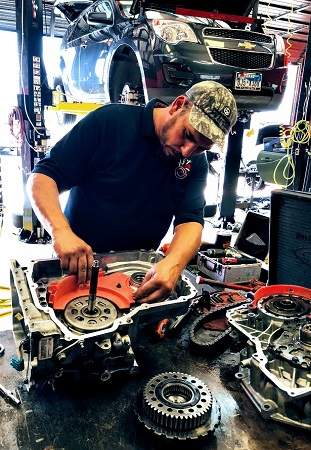
Honda & Acura transmission symptoms are highly sensitive to fluid condition and operating temperature, which must be evaluated before any mechanical diagnosis is performed.
- Honda and Acura transmission symptoms are highly platform-dependent. The correct diagnostic approach is determined by the specific transmission installed in the vehicle.
- Older Accord, Odyssey, or Pilot — Slipping in Third Gear Five-speed third-gear clutch slip is confirmed through clutch pressure testing during third-gear engagement. Honda TSB history is reviewed before any internal disassembly is recommended.
- Pilot, Passport, or Acura MDX — Harsh Low-Speed Shifts ZF nine-speed shift quality concerns are first evaluated against current Honda and Acura TSBs and HDS software calibration before any mechanical diagnosis is performed.
- CR-V or HR-V — CVT Shudder During Acceleration CVT shudder is first addressed with a Honda CVT fluid evaluation and service. If shudder persists after fresh fluid, HDS live ratio monitoring and belt slip data confirm the mechanical fault.
- TCC shudder on six-speed equipped models is evaluated through live TCC command monitoring. ATF condition is inspected before converter replacement is recommended.
- Any Honda or Acura — Check Engine Light With P0740 or P0780 These codes indicate TCC performance or shift solenoid faults. ATF condition is evaluated first, followed by solenoid circuit testing and live TCC data before any parts replacement.
Diagnosis for all Honda and Acura platforms requires platform identification, TSB review, HDS-level live data, and ATF condition evaluation before any transmission repair is recommended.
Related Transmission System Resource
This page connects directly to our comprehensive San Antonio transmission repair hub and to the full library of symptom-specific diagnostic pages that apply directly to Honda and Acura transmission concerns. Because Honda ATF condition is a primary factor in so many transmission symptoms, this page works closely with our transmission fluid leak page and our torque converter failure page.
Our diagnostic testing process ensures ATF condition is evaluated before any mechanical repair is performed on Honda and Acura vehicles.
Safety Considerations
Honda and Acura transmission symptoms vary in urgency by platform. A CR-V or HR-V with mild CVT shudder is typically drivable but should be diagnosed promptly to prevent belt wear progression. An Odyssey or Pilot with a confirmed third-gear clutch failure or a ZF nine-speed in an unpredictable shift state should be driven with caution until diagnosis is complete.
If your Honda or Acura check engine light is on, the transmission is slipping severely, or you have experienced a sudden loss of drive, pull safely to the side of the road and contact our San Antonio shop before continuing to drive. When you call, have your model year, engine size, and a description of when the symptom occurs ready — noting whether the symptom happens at a specific speed or during a specific gear change helps our service team identify your platform and prepare the correct diagnostic procedure before you arrive.
In most cases, Honda and Acura transmission diagnostic testing is completed the same day at our San Antonio shop.
How Repeat Honda & Acura Transmission Failures Are Prevented
- Using only Honda Genuine ATF DW-1 — or Honda Genuine CVT fluid for CVT-equipped models — substituting generic Dexron, multi-vehicle ATF, or Type F causes accelerated clutch wear and solenoid damage across all Honda platforms
- Performing ATF service every 30,000–45,000 miles — Honda’s original drain-and-fill interval guidance applies to normal conditions, not the extended intervals often assumed by owners
- Verifying and applying current TCM software calibration on ZF nine-speed equipped vehicles at every service visit until all applicable TSBs are applied
- Performing a post-ATF-service road test to verify TCC shudder is resolved before returning the vehicle
- Inspecting and cleaning transmission solenoid screens during ATF service on high-mileage Honda and Acura transmissions
- Performing a complete HDS scan after any solenoid, valve body, or CVT repair to verify all parameters are within Honda specification
Honda & Acura Transmission Symptom Pages (Full Diagnostic Library)
Use these pages to research the specific symptom your Honda or Acura vehicle is experiencing:
• Transmission Slipping – Diagnosis of clutch pack wear, solenoid faults, and hydraulic pressure loss — common on older Accord and Odyssey five-speed and six-speed platforms.
• Transmission Jerks or Bangs When Shifting – Diagnosis of harsh shift events — most frequently reported on Honda Pilot, Passport, and Acura MDX with the ZF nine-speed.
• Car Won’t Go Into Gear or Delays Going Into Drive – Diagnosis of delayed engagement — common on CR-V and HR-V CVT platforms and older Odyssey five-speed models.
• Transmission Fluid Leak Under Car – Inspection of pan gaskets, cooler lines, and axle seals — applicable to all Honda and Acura transmission platforms.
• Car Revs but Won’t Move – Diagnosis of complete drive loss — reported on high-mileage Odyssey and Pilot with advanced clutch pack failure.
• Check Engine Light With Transmission Code – Diagnosis of P0740, P0780, and Honda-specific transmission fault codes across all platforms.
• Engine Problems That Feel Like Transmission Issues – Separating Honda 1.5T oil dilution misfires and engine faults from CVT and automatic transmission shudder.
• Torque Converter Failure – Diagnosis of TCC shudder and converter failure — a primary concern on Honda Accord, Pilot, and Odyssey six-speed platforms.
Frequently Asked Questions About Honda & Acura Transmission Repairs.
What are the most common Honda and Acura transmission repair concerns?
The most common confirmed Honda and Acura transmission repair needs include third-gear clutch failure on older Accord, Odyssey, and Pilot five-speed models, TCC shudder on six-speed V6 platforms, harsh shift quality on ZF nine-speed equipped Pilot, Passport, and Acura MDX models, and CVT shudder on newer CR-V and HR-V models. Each requires a platform-specific diagnostic approach.
Does the Honda Pilot have transmission issues?
Yes. Older Pilot models with the five-speed and six-speed have documented third-gear clutch and TCC shudder histories. The 2016-forward Pilot with the ZF nine-speed has been subject to multiple Honda TSBs addressing harsh low-speed shifts and unpredictable downshifts. Many ZF nine-speed concerns are resolved through a TCM software update before any mechanical repair is needed.
Does the Honda Odyssey have transmission issues?
Yes. The Odyssey has one of the most documented Honda transmission failure histories — particularly models from 2002 to 2010 with the five-speed automatic. Third-gear clutch failure and TCC shudder are the most common confirmed faults. Honda issued extended warranty coverage and TSBs for many of these failures. High-mileage Odyssey transmissions require hydraulic clutch pressure testing and ATF condition evaluation before any repair is recommended.
What transmission fluid does a Honda use?
Most modern Honda and Acura vehicles require Honda Genuine ATF DW-1. CVT-equipped models require Honda Genuine CVT fluid. Using generic Dexron, multi-vehicle ATF, or any non-Honda specified fluid causes clutch wear, solenoid swelling, and TCC shudder. Always verify the correct specification for your model year before any fluid service.
Can a software update fix a Honda ZF nine-speed transmission concern?
In many cases, yes. Honda and Acura have issued multiple TCM calibration updates for the ZF nine-speed addressing harsh low-speed shifts and unpredictable downshift behavior. Verifying the current software version and applying any applicable Honda TSB update is always the first diagnostic step on ZF nine-speed equipped vehicles before any mechanical diagnosis is performed.
How much does Honda or Acura transmission repair cost in San Antonio?
Cost depends entirely on the confirmed fault and platform. An ATF fluid service or TCM software update differs significantly in cost from a third-gear clutch repair or ZF valve body replacement. Accurate platform-specific diagnosis — including fluid evaluation and TSB review before mechanical testing — determines the correct repair scope before any cost is committed.
Have Transmission Repair Questions?
Call 210-495-6688 now to speak with an ASE-Certified Transmission specialist or automotive service consultant.