
Dodge, Ram & Jeep Transmission Repairs | San Antonio TX
If your Dodge, Ram & Jeep has started slipping, shuddering, shifting hard, or refusing to engage, the uncertainty is the worst part — not knowing whether you are looking at a software update, a solenoid, or something more serious. That uncertainty is exactly where unnecessary repairs happen — when parts get replaced before the actual cause is confirmed.
Dodge, Chrysler, and Jeep share several distinct transmission platforms — the 68RFE, 545RFE, 8HP70, 62TE, and NAG1 — across the Ram 1500 and 2500, Charger, Challenger, Durango, Grand Cherokee, Wrangler, Chrysler 300, and Pacifica. The same symptom on a Ram and a Pacifica can point to completely different faults depending on which platform is installed.
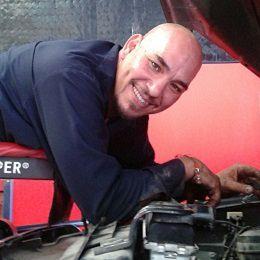
Carlos Rodriguez and our ASE-certified team use Dodge, Chrysler, and Jeep-specific diagnostic procedures to identify the exact fault before anything is recommended. Clear answer first. Every time. Learn more about our transmission repair services in San Antonio.
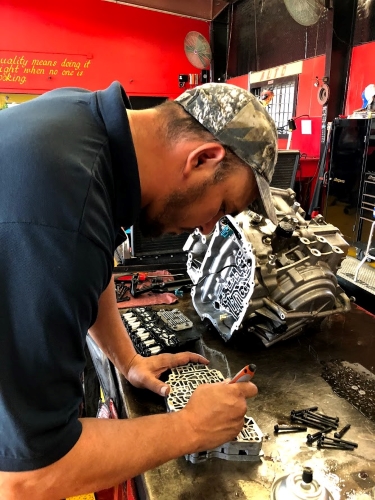
Dodge, Ram & Jeep – Diagnostic Overview
Dodge, Ram, Chrysler, and Jeep vehicles span a wide range of transmission platforms — and the differences matter significantly for diagnosis. The 68RFE six-speed in a Ram 2500 diesel is a heavy-duty truck transmission with completely different failure patterns than the 8HP70 eight-speed in a Ram 1500, Charger, or Challenger. The 62TE front-wheel-drive automatic in a Chrysler Pacifica operates differently than either. Jeep vehicles — including the Grand Cherokee and Wrangler — share many of these same platforms and are diagnosed using the same procedures at our shop.
Diagnostic Snapshot
Dodge and Chrysler transmission diagnosis begins with model year and platform identification, full fault code retrieval from the powertrain control module and transmission control module, and live data monitoring specific to the identified platform. Many complaints on these platforms are resolved through TCM software recalibration or solenoid pack service before any internal disassembly is required.
The sections below cover the most common failure patterns by platform, which models are affected, and how structured diagnostic testing isolates the exact fault before any repair is recommended.
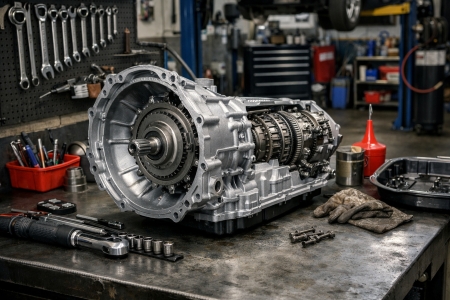
What Dodge, Ram & Jeep Owners Typically Experience
Dodge, Ram & Jeep transmission problems most commonly reported by owners include:
- Shudder or vibration at highway speed during light throttle — common on Ram 1500 with the 8HP70
- Transmission slipping or harsh shifts — frequently reported on Ram 2500 and 3500 with the 68RFE
- Delayed engagement or hesitation from park to drive — common on Chrysler Pacifica and Town and Country with the 62TE
- Harsh downshifts or kickdown hesitation — reported on Charger, Challenger, and 300 with NAG1 and 8HP70
- Transmission warning light or check engine light with P07xx or P17xx fault codes
- Complete loss of drive on high-mileage units — reported on Ram diesel and Durango
Why Dodge, Ram & Jeep -Specific Diagnosis Matters
Dodge and Chrysler transmission platforms differ significantly in design, fluid specification, and failure behavior. The 68RFE in Ram diesel trucks has a documented history of solenoid pack failure and governor pressure faults that require completely different testing than the ZF-sourced 8HP70 in the Ram 1500 and Charger. The 62TE requires its own clutch volume index testing procedure. What that means for you is that year and platform identification determines every diagnostic step that follows — not just where testing begins.
At Auto Service Experts, every Dodge, Ram, and Chrysler transmission diagnostic begins with platform identification, TSB review, and model-year-specific live data procedure selection before any component testing is performed.
Common Dodge, Ram & Jeep Transmission Problems by Platform
68RFE — Six-Speed Heavy-Duty Automatic Ram 2500 and 3500 Diesel (2007–Present)
If you run a Ram 2500 or 3500 diesel for work or towing, the 68RFE is one of the most frequently diagnosed transmissions at our shop — and one of the most misdiagnosed elsewhere. Confirmed failure patterns include solenoid pack failure causing erratic shifting and fault codes, overdrive clutch pack wear, governor pressure solenoid faults, and converter clutch shudder under towing loads. The 68RFE is particularly vulnerable when towing exceeds rated capacity without transmission temperature monitoring. Carlos Rodriguez and our team use solenoid resistance testing, hydraulic pressure analysis, and live adaptive data review to confirm the exact fault before any repair is recommended.
8HP70 and 8HP45 — Eight-Speed Automatic Ram 1500, Charger, Challenger, Chrysler 300, Durango, Grand Cherokee (2013–Present)
The ZF-sourced 8HP70 and 8HP45 are capable transmissions — which is exactly why owners are caught off guard when symptoms appear. Harsh engagement from park to drive or reverse, shudder during torque converter lockup at highway speed, and erratic downshifts under light deceleration are all confirmed failure patterns. Many complaints on this platform are resolved through TCM software recalibration before any mechanical diagnosis is needed. Valve body wear and solenoid faults are confirmed in higher-mileage units. TSB review, software version verification, and live shift quality data confirm the fault before any hardware replacement is recommended.
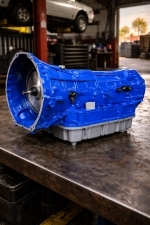
545RFE and 45RFE — Five-Speed Automatic Ram 1500, Durango, Grand Cherokee (2003–2012)
If your older Ram 1500, Durango, or Grand Cherokee is slipping into limp mode or shifting erratically, the governor pressure solenoid is the first thing we evaluate on this platform. Governor pressure solenoid failure is the most common confirmed fault — causing erratic shifts, limp mode engagement, and fault codes that are frequently misread as requiring a full rebuild. Overdrive solenoid wear and converter clutch shudder are also confirmed at high mileage. Solenoid pack testing, hydraulic pressure analysis, and governor pressure sensor evaluation confirm whether the fault is solenoid-related or mechanical before any repair decision is made.
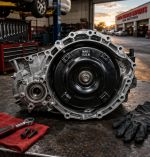
62TE — Six-Speed Front-Wheel-Drive Automatic Chrysler Pacifica, Town and Country, Dodge Journey (2007–Present)
Minivan and Journey owners do not expect transmission problems — which is why delayed engagement and shudder on this platform tend to get ignored longer than they should. Delayed engagement, solenoid wear, clutch volume index faults, and torque converter shudder are all confirmed failure patterns on the 62TE. What makes this platform distinct is that a clutch volume index reset is required after any solenoid or fluid service to restore proper shift quality — skipping this step is one of the most common causes of repeat complaints after service elsewhere. CVI testing, solenoid resistance analysis, and hydraulic pressure evaluation confirm the fault before any repair is recommended.
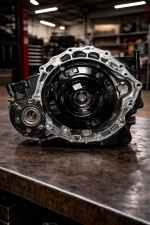
NAG1 (722.9) — Five-Speed Automatic Chrysler 300, Dodge Charger, Challenger, Magnum (2005–2010)
Most Charger, Challenger, and 300 owners do not know their transmission was sourced from Mercedes-Benz — which makes the NAG1’s failure patterns worth understanding before any repair decision is made. Harsh downshifts, torque converter shudder, and conductor plate failure inside the valve body are the most commonly confirmed faults. The conductor plate integrates the solenoids and speed sensors into a single unit — when any individual component fails, the entire plate requires replacement. That design makes accurate diagnosis especially important before any disassembly begins. Conductor plate circuit testing and live solenoid data comparison confirm the fault before any repair is recommended.
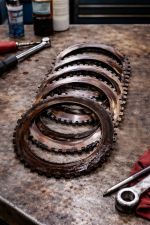
High-Mileage Wear — All Dodge, Ram, Chrysler & Jeep Platforms
Past 100,000 miles wear patterns become predictable across all Dodge and Chrysler platforms. Solenoid pack wear, converter clutch friction material degradation, and valve body pressure faults are all confirmed — and significantly more common when Mopar ATF+4 fluid service intervals have been missed or incorrect fluid has been used. Generic transmission fluid in a Dodge or Chrysler transmission causes solenoid swelling and pressure faults that produce symptoms indistinguishable from mechanical failure. Hydraulic pressure testing and internal inspection confirm whether the fault is fluid-related or mechanical before any repair is recommended.
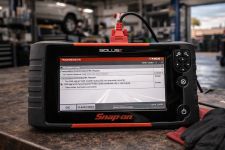
Dodge, Ram & Jeep| 8HP70 | Harsh Engagement
Owner reported a harsh clunk engaging drive from park on a 2019 Ram 1500 — most noticeable on cold starts. Previous shop quoted a valve body replacement. TSB review identified an open TCM calibration update addressing 8HP70 cold engagement behavior. Software version confirmed out of date. Calibration update performed. Cold-start engagement returned to normal. No valve body replacement. No parts
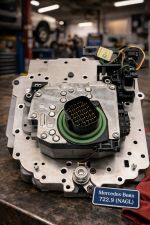
Dodge, Ram, Chrysler & Jeep | 62TE | Delayed Engagement
Owner reported a 2 to 3 second delay engaging drive from park on a 2014 Chrysler Town and Country — present in both cold and warm conditions. Previous shop recommended a transmission rebuild. CVI testing confirmed clutch volume index values outside specification following a recent fluid service performed elsewhere. Clutch volume index reset performed. Engagement returned to normal immediately. No rebuild required. No parts.
Professional Diagnostic Process for Dodge, Ram & Jeep Transmissions
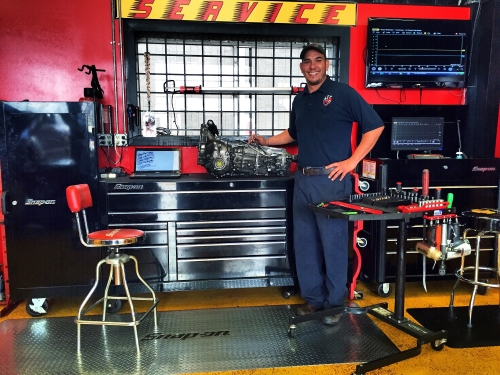
The following Dodge, Ram & Jeep vehicles are among the most frequently diagnosed for transmission concerns at our San Antonio shop
Verified Dodge, Ram & Jeep Diagnostic Protocol
- Identify vehicle brand, model year, engine, and transmission platform before any testing begins
- Review applicable Stellantis Technical Service Bulletins for the identified platform
- Retrieve all stored and pending fault codes from PCM and TCM
- Review freeze-frame and adaptive shift data
- Perform platform-specific hydraulic pressure test or CVI evaluation
- Conduct a road test with live solenoid command, pressure, and TCC data monitored simultaneously
- Perform solenoid pack or conductor plate resistance and circuit testing on identified fault circuits
- Verify current TCM software calibration and update if Stellantis TSB applies
- Confirm repair with final road test, system scan, and adaptive data reset
This structured approach ensures Dodge, Ram & Jeep-specific faults are correctly identified and resolved the first time.
Dodge, Ram & Jeep Models Commonly Serviced
The following vehicles are among the most frequently diagnosed for transmission concerns at our San Antonio shop: Each vehicle is diagnosed using model-year and platform-specific procedures before any repair is recommended.
Ram 1500 (2013–Present)
The Ram 1500 uses the 8HP70 or 8HP45 eight-speed. Harsh park-to-drive engagement, TCC shudder, and erratic downshifts are the most commonly confirmed faults. Many complaints are resolved with a TCM software update.
Ram 2500 and 3500 Diesel (2007–Present)
The Ram diesel uses the 68RFE exclusively. Solenoid pack failure, overdrive clutch wear, and converter shudder under tow loads are the most commonly confirmed faults on this platform.
Dodge Charger and Challenger (2005–Present)
Earlier models use the NAG1 five-speed. Models from 2013 forward use the 8HP70. Conductor plate failure on the NAG1 and TCM calibration faults on the 8HP70 are the most commonly confirmed issues.
Dodge Magnum (2005–2008)
The Magnum uses the NAG1 five-speed automatic shared with the Charger and Chrysler 300. Conductor plate failure, torque converter shudder, and harsh downshifts are the most commonly confirmed faults on this platform.
Chrysler 300 (2005–Present)
The 300 shares transmission platforms with the Charger — NAG1 through 2012 and 8HP70 from 2013 forward. Conductor plate failure on older units and TCM calibration faults on newer ones are the most commonly confirmed issues.
Dodge Durango and Jeep Grand Cherokee (2011–Present)
The Durango and Grand Cherokee use the 8HP70 or 8HP45. Harsh engagement, TCC shudder, and solenoid faults are the most commonly confirmed issues on these platforms.
Jeep Wrangler (2012–Present)
The Wrangler uses the 545RFE or the newer 8HP70 depending on model year and engine. Harsh engagement and solenoid wear are the most commonly confirmed faults on both platforms.
Chrysler Pacifica and Town and Country (2007–Present)
The Pacifica and Town and Country use the 62TE six-speed. Delayed engagement, solenoid wear, and CVI faults are the most commonly confirmed issues.
Dodge Journey (2009–Present)
The Journey uses the 62TE six-speed or the 41TE four-speed depending on model year and engine. Delayed engagement and solenoid wear are the most commonly confirmed faults on both units.
Ram 1500 Classic and Older Ram Trucks (2003–2012)
545RFE or 45RFE. Governor pressure solenoid failure and overdrive clutch wear are the most commonly confirmed faults on these high-mileage platforms.
What Dodge, Ram & Jeep Transmission Problems Are NOT
Dodge, Ram, Chrysler, and Jeep transmission concerns are frequently misidentified. Proper differential diagnosis separates confirmed transmission faults from:
8HP70 Firm Engagement Mistaken for Mechanical Failure
That hard clunk when you shift into drive on a Ram 1500 or Grand Cherokee is often not a transmission fault at all. The 8HP70’s firm park-to-drive engagement is frequently caused by an outdated TCM calibration or cold fluid behavior rather than a solenoid or valve body fault. A software update frequently resolves the complaint without any parts replacement.
Engine Misfire Mistaken for 68RFE Shudder
On a Ram diesel, not every shudder is a transmission shudder. The 6.7L Cummins combustion characteristics at idle and low load produce a vibration that is frequently mistaken for 68RFE converter clutch shudder. Dual-system live data monitoring during the shudder event confirms whether the fault originates in the engine or the transmission before any converter work is recommended.
Motor Mount Failure Mistaken for Transmission Bang
Worn engine or transmission mounts on Ram trucks produce a clunk or bang during gear engagement that feels identical to an internal transmission fault. Mechanical inspection under load separates mount failure from internal transmission causes before any disassembly is performed.
Symptom-Specific Diagnosis for Dodge, Ram & Jeep Vehicles
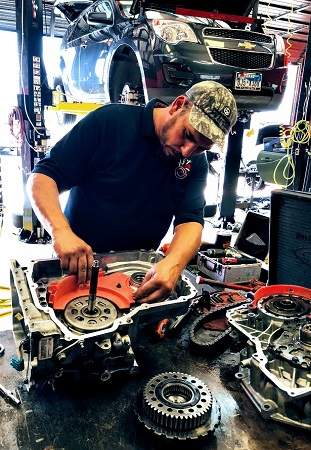
The same symptom can point to a completely different cause depending on which Dodge, Ram & Jeep platform your vehicle has. Here is how diagnosis is approached for the most common complaints.
- Ram 1500 Harsh Engagement or TCC Shudder — 8HP70 complaints are first evaluated against current Stellantis TSBs and TCM software calibration before any mechanical diagnosis is performed. Fluid condition and TCC slip data are verified before converter replacement is recommended.
- Ram 2500 or 3500 Diesel Erratic Shifts or Limp Mode — 68RFE solenoid pack resistance testing and governor pressure circuit evaluation are performed before any solenoid or valve body replacement is recommended. Towing history and transmission temperature data are reviewed as part of the diagnosis.
- Charger, Challenger, or 300 Harsh Downshift or Shudder — NAG1-equipped vehicles receive conductor plate circuit testing and solenoid data comparison. 8HP70-equipped vehicles receive TCM software verification and live shift quality monitoring before mechanical diagnosis.
- Durango, Grand Cherokee, or Wrangler Harsh Engagement or Shudder — 8HP70 and 545RFE complaints are evaluated through TSB review, software verification, and live TCC data before any mechanical repair is recommended.
- Pacifica, Town and Country, or Journey Delayed Engagement — 62TE delayed engagement is diagnosed through CVI testing and solenoid resistance analysis to confirm whether the fault is electronic, hydraulic, or clutch-related before any internal work is recommended.
- Any Dodge, Ram, Chrysler or Jeep — Transmission Code P07xx or P17xx — Codes in these ranges indicate solenoid circuit, pressure, or mechanical faults. Code retrieval is followed by circuit testing before any solenoid replacement is recommended.
Diagnosis for all platforms requires model year identification, TSB review, and platform-specific live data procedures.
Dodge, Ram & Jeep Related Transmission System Resource
This page connects directly to our transmission repair services hub and to the full library of symptom-specific diagnostic pages covering Dodge, Ram, Chrysler, and Jeep transmission problems. Because faults on these platforms present across such a wide range of symptoms — from 68RFE limp mode to 8HP70 cold engagement to 62TE CVI faults — the pages below provide platform-specific diagnostic detail for each condition your vehicle may be experiencing.
Carlos Rodriguez and our team apply Dodge, Ram, and Chrysler platform-specific procedures on every diagnostic to confirm the exact fault before any repair is recommended.
Safety Considerations
Dodge, Ram & Jeep transmission problems vary significantly in urgency depending on the platform and symptom. A Ram 1500 with 8HP70 shudder is typically drivable and can be brought in for evaluation before any mechanical repair is committed — but it should be diagnosed promptly. Converter contamination spreads to solenoid circuits when shudder is ignored, turning a fluid service or software update into a more involved repair.
A Ram diesel with the 68RFE in limp mode is a different situation entirely. Continuing to drive — and especially continuing to tow — with a limp-mode 68RFE causes rapid overdrive clutch damage. That vehicle should not be operated under load until it has been diagnosed.
If your Dodge, Ram, Chrysler, or Jeep transmission warning light is on, the vehicle is stuck in a single gear or limp mode, or you have experienced a sudden loss of drive, pull safely to the side of the road and contact our San Antonio shop before attempting further operation. When you call, have your model year, engine size, towing history if applicable, and a description of when the symptom occurs ready — that information allows our service team to identify your platform and prepare the correct diagnostic procedure before you arrive.
In most cases Dodge, Ram, Chrysler, and Jeep transmission diagnostic testing is completed the same day at our San Antonio shop.
Dodge, Ram & Jeep Failures Prevention
Most repeat Dodge and Chrysler transmission failures share a common cause — incorrect fluid, a missed reset procedure, or an outdated software calibration. Preventing them requires the same platform-specific discipline as the diagnosis itself.
- Using only Mopar ATF+4 fluid in all Dodge and Chrysler applications — incorrect fluid is a primary cause of solenoid swelling, pressure faults, and converter damage across all platforms
- Performing fluid and filter service at recommended intervals — the 68RFE in particular requires regular service when used for towing
- Performing a clutch volume index reset after any solenoid, fluid, or valve body service on 62TE-equipped vehicles
- Resetting adaptive shift data after any solenoid or TCM service on 8HP70 and 68RFE platforms
- Verifying current TCM software calibration after any module replacement or battery disconnect
- Monitoring transmission temperature during towing operations on Ram diesel trucks to prevent 68RFE overdrive clutch damage
- Every Dodge, Ram, Chrysler, and Jeep transmission repair at Auto Service Experts follows these procedures before the vehicle leaves the shop.
Dodge, Ram & Jeep Transmission Symptom Pages (Full Diagnostic Library)
Use these pages to research the specific symptom your Dodge, Ram, Chrysler, or Jeep vehicle is experiencing:
- Transmission Slipping — Diagnosis of clutch pack wear, solenoid faults, and hydraulic pressure loss — common on Ram 68RFE and Pacifica 62TE.
- Transmission Jerks or Bangs When Shifting — Diagnosis of harsh shift events — frequently reported on Ram 1500, Charger, and Grand Cherokee with the 8HP70.
- Car Won’t Go Into Gear or Delays Going Into Drive — Diagnosis of delayed engagement — common on Pacifica and Town and Country with the 62TE.
- Transmission Fluid Leak Under Car — Inspection of pan gaskets, cooler lines, and seals — applicable to all Dodge, Ram, Chrysler, and Jeep transmission platforms.
- Car Revs but Won’t Move — Diagnosis of complete drive loss — reported on high-mileage Ram diesel, Durango, and Grand Cherokee.
- Check Engine Light With Transmission Code — Diagnosis of P07xx and P17xx fault codes across all Dodge, Ram, Chrysler, and Jeep platforms.
- Engine Problems That Feel Like Transmission Issues — Separating Cummins diesel combustion vibration and Hemi engine misfires from transmission faults on Ram and Charger.
- Torque Converter Failure — Diagnosis of TCC shudder and converter failure — a primary concern on Ram 1500 with 8HP70 and Ram diesel with 68RFE.
Frequently Asked Questions About Dodge, Ram & Jeep Transmission Problems.
What are the most common Dodge and Chrysler transmission problems?
The most common confirmed Dodge, Ram, Chrysler, and Jeep transmission problems are solenoid pack failure and overdrive clutch wear on the Ram diesel 68RFE, harsh engagement and TCC shudder on the 8HP70 in Ram 1500, Durango, and Grand Cherokee, conductor plate failure on the NAG1 in older Charger and 300 models, and delayed engagement on the Chrysler Pacifica 62TE. Each requires a platform-specific diagnostic approach.
Does the Ram 1500 have transmission problems?
The Ram 1500’s 8HP70 is known for firm park-to-drive engagement and TCC shudder at highway speed. Many complaints are resolved through a TCM software update without any parts replacement. Valve body and solenoid wear are confirmed in higher-mileage units. Accurate diagnosis confirms whether the fault is electronic or mechanical before any repair is recommended.
Does the Ram 2500 diesel 68RFE have transmission problems?
Yes. The 68RFE is one of the most frequently diagnosed transmissions at our shop. Solenoid pack failure, overdrive clutch wear, and governor pressure faults are the most common confirmed issues. The 68RFE is particularly vulnerable when operated under heavy tow loads without adequate transmission temperature monitoring.
What transmission fluid does a Dodge, Ram, Chrysler, or Jeep vehicle use?
Most Dodge and Chrysler transmissions require Mopar ATF+4 fluid. Using the wrong fluid — including generic Dexron or Type F — causes solenoid swelling, pressure faults, and accelerated clutch wear. Always verify the correct specification for your specific model and year before any fluid service.
What is the NAG1 transmission and what problems does it have?
The NAG1 — also known as the Mercedes 722.9 — is a five-speed automatic used in the Chrysler 300, Dodge Charger, Challenger, and Magnum from approximately 2005 to 2010. Its most common failure is the conductor plate, which integrates the solenoids and speed sensors into a single unit. A failed conductor plate causes erratic shifting, fault codes, and limp mode and requires full replacement of the plate assembly.
How much does Dodge, Ram, Chrysler, or Jeep transmission repair cost in San Antonio?
Cost depends entirely on the confirmed fault and platform. A TCM software update or solenoid pack replacement differs significantly in cost from a 68RFE overdrive clutch repair or a full 8HP70 valve body service. Accurate platform-specific diagnosis determines the repair scope before any cost is committed.
Have Transmission Repair Questions?
Call 210-495-6688 now to speak with an ASE-Certified Transmission specialist or automotive service consultant.