
Check Engine Light Transmission Code | San Antonio, TX
If your check engine light is on and a scan reveals a transmission-related fault code, you are dealing with a check engine light transmission code.
Your vehicle’s transmission control module has detected an electronic, hydraulic, or mechanical fault and stored it for diagnosis. Our San Antonio transmission repair team retrieves the exact fault code, reviews live transmission data, and traces the fault to its source before any repair is recommended.
That code is a starting point, not a conclusion. Depending on what triggered it, the transmission may shift normally, shift harshly, or enter a reduced-function mode that limits gear selection until the fault is resolved. This condition is commonly reported on Ford, Chevy, Dodge, Toyota, Honda, and Nissan vehicles.
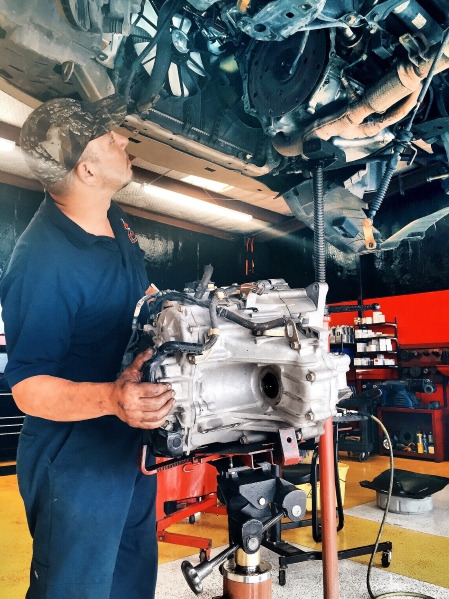
Check Engine Light Transmission Code Diagnostic Overview
This page is part of the Transmission Diagnostic Support Series at Auto Service Experts in San Antonio and is designed to answer one primary concern: what does a check engine light transmission code mean, and what needs to be done?
A check engine light with a stored transmission code means the transmission control module has detected a parameter outside of its programmed operating range. Depending on the fault, the transmission may operate normally, shift harshly, or enter a reduced-function mode that limits gear selection. The code identifies where the fault was detected. It does not identify what caused it.
Diagnostic Snapshot
When a check engine light transmission code is present, the fault may be electronic, hydraulic, mechanical, or software-related. Our team starts with code retrieval, freeze-frame data review, and live transmission data monitoring to determine whether the fault is active, intermittent, or historical before any repair is recommended.
For complete transmission system coverage, visit our transmission repair hub.
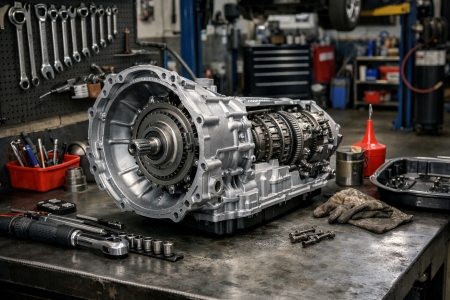
When a check engine light transmission code is present, drivers commonly report:
When a Check Engine Light Transmission Code is on (or a check engine light with a transmission code) drivers commonly report:
- Check engine light illuminated steadily or flashing on the dashboard
- Transmission shifting normally with no noticeable change in drive quality
- Harsh, delayed, or erratic shifting, depending on the fault
- Transmission stuck in a single gear or limited gear range
- A separate transmission warning light illuminated alongside the check engine light
- Symptoms that appear and disappear with no consistent pattern
Why Proper Check Engine Light Transmission Code Diagnosis Matters
A transmission fault code stored in the control module is a data point, not a conclusion. The same code can be triggered by a failed solenoid, a wiring fault, a software error, or a mechanical failure depending on the vehicle and conditions. We have traced check engine light transmission codes that pointed to solenoid circuits and found the root cause in an overpacked connector that was preventing the TCM from communicating upstream. The module was fine. The connector was the problem.
Our team starts with full code retrieval, freeze-frame data analysis, live solenoid and pressure monitoring, circuit integrity testing, and module communication verification. We figure out why the code was stored before any transmission repair is recommended.
Common Verified Check Engine Light Transmission Code
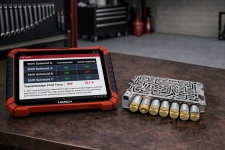
Failed or Degraded Shift Solenoid
A shift solenoid that has failed electrically or mechanically triggers a solenoid performance or circuit code. The code identifies the solenoid circuit but does not confirm whether the solenoid itself or its wiring is at fault. Our team verifies through solenoid resistance testing and live scan data.
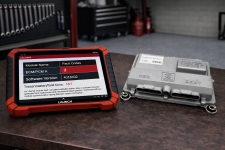
Transmission Control Module Fault or Software Error
An internal module fault, corrupted calibration data, or outdated software can generate fault codes without any mechanical failure present. Our team confirms through module communication testing and software version verification.
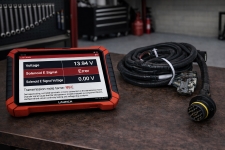
Wiring Harness or Connector Fault
Damaged wiring, corroded terminals, or loose connectors in the transmission harness cause signal interruptions that the module interprets as component failures. Our team verifies through circuit continuity testing and voltage drop analysis.
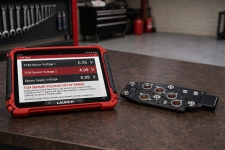
. Hydraulic Pressure Fault
Insufficient or excessive hydraulic pressure in a specific gear circuit triggers pressure-related fault codes. This can result from a failing solenoid, valve body wear, or a worn transmission pump. Our team confirms through live hydraulic pressure testing.
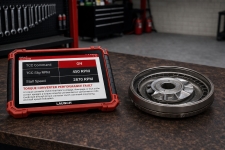
Torque Converter Clutch Fault
A torque converter clutch that fails to engage, disengage, or lock at the correct speed triggers a torque converter performance code. Our team confirms through torque converter clutch command monitoring and stall speed evaluation.
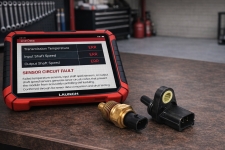
Transmission Temperature Sensor or Speed Sensor Fault
Failed temperature sensors, input shaft speed sensors, or output shaft speed sensors generate sensor circuit codes that prevent the module from accurately controlling shift scheduling. Our team confirms through live sensor data comparison and circuit testing.
Professional Diagnostic Process
Our ASE CodeLogic diagnostic workflow for a check engine light transmission code includes:
Verified Transmission Diagnostic Protocol
- Listen to the customer concern and document check engine light behavior, steady or flashing
- Retrieve all stored, pending, and historical transmission fault codes
- Review freeze-frame data to identify conditions present when the fault was stored
- Monitor live solenoid commands, pressures, and sensor inputs at idle
- Conduct a structured road test with live data monitoring across all gear ranges
- Test circuit integrity on the identified fault circuit
- Perform voltage drop and continuity testing on the harness and connectors
- Verify transmission control module software version and update if applicable
- Clear codes, complete a full drive cycle, and perform a final system scan to confirm the transmission repair is resolved
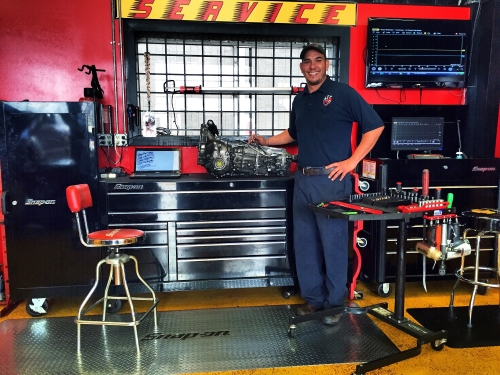
This structured approach ensures the fault is traced to its source and the code does not return.
Parts Commonly Replaced In Check Engine Light Transmission Code Repair
Each component is replaced only after our team confirms it as the root cause through structured diagnostic testing.
Shift Solenoid or Solenoid Pack
Shift solenoids control hydraulic fluid routing to specific gear circuits. A failed solenoid generates a circuit or performance code and may cause erratic shifting, gear slip, or failsafe mode activation depending on which solenoid has failed.
Transmission Wiring Harness or Connector
The transmission wiring harness connects all solenoids, sensors, and the control module. Damaged wiring or corroded terminals cause signal faults that generate codes without any internal mechanical failure present.
Transmission Control Module
The transmission control module processes all sensor inputs and commands all solenoid outputs. An internal module fault or corrupted software generates fault codes and can cause incorrect shift behavior even when all mechanical components are functioning correctly.
Torque Converter
A torque converter that fails to achieve correct lockup generates a torque converter clutch performance code. Our team performs stall testing and converter clutch command monitoring to confirm the converter as the fault source before replacement.
Input or Output Speed Sensor
Speed sensors provide the control module with shaft rotation data used to calculate shift points and gear ratios. A failed sensor generates a speed sensor circuit code and can cause erratic shift scheduling or failsafe activation.
Transmission Fluid and Filter
Degraded or contaminated fluid affects solenoid response and hydraulic pressure consistency. A fluid service is performed as part of any transmission repair where fluid condition is confirmed as a contributing factor to the stored code.
What the Check Engine Light Transmission Code is NOT
A check engine light transmission code is often misunderstood. Here is what the code does and does not indicate:
A Code Is Not a Confirmed Parts Diagnosis
A stored fault code identifies the circuit or system where a fault was detected, not the specific failed component. A solenoid circuit code may be caused by the solenoid, its wiring, its connector, or the module that commands it. Our team tests each possibility to confirm which component is at fault before any transmission repair is recommended.
A Flashing Check Engine Light Is Not the Same as a Steady Light
A steady check engine light indicates a stored fault that requires diagnosis but may not affect drivability immediately. A flashing check engine light indicates an active, severe fault, often a misfire, that requires immediate attention to prevent catalytic converter damage.
A Transmission Code Does Not Always Mean Transmission Damage
Many transmission codes are triggered by electronic or wiring faults with no internal mechanical damage present. Our team traces each code to its source. In many cases the fault is resolved without any internal transmission disassembly.
Condition-Specific Check Engine Light Transmission Code Diagnosis
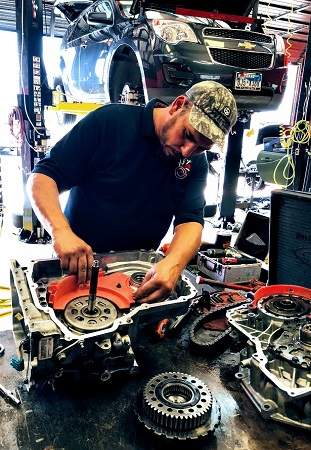
Transmission fault code behavior varies depending on whether the fault is active, intermittent, or historical. That distinction shapes the entire diagnostic approach.
- Code Present With No Drivability Symptoms A stored code with no noticeable shift problems typically indicates an intermittent or historical fault. Our team reviews freeze-frame data and monitors live transmission data during a road test to determine whether the fault is still active.
- Code Present With Harsh or Erratic Shifting. An active code accompanied by shift quality changes indicates the fault is currently affecting transmission operation. Our team monitors live solenoid command and pressure data during shifting to isolate the fault circuit.
- Code Present With Transmission in Failsafe Mode: A transmission locked in a single gear or limited range has entered failsafe mode to protect internal components. Our team identifies the triggering fault through the stored code and traces it to its source to restore normal gear selection.
- Code Returns Immediately After Clearing: A code that returns within one drive cycle after clearing indicates an active fault that is continuously present. This points to a failed component rather than an intermittent wiring or software issue.
- Code Returns Only After Extended Driving or Heat Soak. A code that only returns after the transmission reaches full operating temperature points to a heat-sensitive solenoid, a connector that loses contact when hot, or fluid that degrades under thermal load.
Our team reviews freeze-frame data, monitors live data during a road test, and tests circuit integrity under operating conditions to get to the root of each fault.
Safety Considerations
A steady check engine light with a transmission code means a fault has been detected that requires diagnosis. If the transmission is shifting normally and no other warning lights are present, the vehicle can typically be driven carefully to a shop for evaluation.
If the transmission has entered failsafe mode, is shifting erratically, or the check engine light is flashing, the vehicle should not be driven until the fault is diagnosed. Continued driving in failsafe mode places additional stress on the limited available gear and can accelerate internal wear.
Drivers in San Antonio with a check engine light transmission code should schedule diagnosis promptly. Our team completes diagnostic testing the same day in most cases. Call us at 210-495-6688 to arrange a same-day appointment and we will retrieve the fault code, trace it to its source, and explain what needs to happen before any transmission repair is recommended.
How Repeat Transmission Problems are Prevented
After any transmission repair, our team works through a structured post-repair process to make sure the fault does not return:
- Verify all fault codes are cleared and do not return after a complete drive cycle
- Inspect the full transmission wiring harness and all connectors for chafing, corrosion, and proper routing
- Update transmission control module software to the current manufacturer calibration when applicable
- Perform a transmission fluid and filter service when fluid condition is confirmed as a contributing factor
- Confirm solenoid resistance values are within specification after any solenoid or harness replacement
- Document all codes, freeze-frame data, and repair procedures for future reference
Our team does not close the job until the vehicle passes a full post-repair evaluation, including a completed drive cycle and a clean final system scan.
Related Transmission Symptoms
Explore other Transmission Diagnostic Support pages:
- A check engine light transmission code tied to clutch pack wear or hydraulic pressure loss often accompanies the symptom covered on our Transmission Slipping and Gear Slip Diagnosis page, where RPM flare and loss of drive feel under acceleration are evaluated through the same structured testing process.
- Stored fault codes related to engagement solenoids or range sensor circuits frequently accompany the condition covered on our Transmission Won’t Engage or Delays Going Into Drive page, where hydraulic pressure and solenoid response testing determines the exact cause of delayed or failed engagement.
- Pressure control solenoid codes that trigger a check engine light often produce the shift quality concerns covered on our Transmission Jerks and Bangs During Gear Changes page, where valve body wear and solenoid circuit faults behind harsh shift events are evaluated in detail.
- Check engine light transmission codes related to pressure loss or temperature irregularities can indicate fluid loss through a compromised seal or gasket. If a fluid puddle has appeared alongside the warning light, our Transmission Fluid Leak Location and Seal Inspection page outlines how leak sources are identified and whether secondary damage has occurred.
- When a check engine light transmission code precedes complete loss of drive, the fault has progressed into the mechanical failure territory covered on our Car Revs but Doesn’t Move page, where torque converter failure and total hydraulic pressure loss are evaluated through structured diagnostic testing.
Frequently Asked Questions About Check Engine Light Transmission Code
What does a check engine light transmission code mean?
It means the transmission control module has detected a parameter outside of its normal operating range and stored a fault code. The code identifies the affected circuit or system. Our team performs structured testing to trace it to the exact root cause.
Can I drive with a check engine light transmission code?
If the transmission is shifting normally and the light is steady, the vehicle can typically be driven carefully to a shop. If the light is flashing, the transmission is in failsafe mode, or shifting is erratic, the vehicle should not be driven until our team has evaluated the fault.
Will clearing the transmission code fix the problem?
No. Clearing the code removes the stored record but does not correct the underlying fault. The code will return once the fault condition is detected again during normal driving.
Does a transmission code always mean I need a new solenoid?
No. The same code can be triggered by a failed solenoid, damaged wiring, a corroded connector, or a module fault. Our team tests each possibility in the fault circuit before any transmission repair is recommended.
What is transmission failsafe mode?
Failsafe mode is a protective function that limits the transmission to one or two gear ranges when the control module detects a severe fault. It limits drivability until the fault is resolved. Our team identifies the triggering fault and explains what needs to happen to restore normal operation.
How much does it cost to diagnose and repair a transmission code?
Diagnostic testing determines the exact fault and repair scope. Electronic faults such as wiring repairs or software updates differ significantly in cost from solenoid or internal component replacement. Our team explains what was found and what is needed before any work begins.
Have Transmission Diagnostic or Repair Questions?
Call 210-495-6688 now to speak with an ASE-Certified Transmission Specialist or automotive service consultant.