
GM Transmission Control Module No Communication Case Study
When a Transmission Control Module loses communication or begins sending incorrect commands, the results can be harsh shifts, limp mode, or a transmission that refuses to move. At Auto Service Experts in San Antonio, we provide complete Transmission Control Module services including module diagnostics, replacement, reprogramming, quick learn procedures, and full network testing. This case study shows how we diagnosed a GM no-communication issue that looked like a failed module but turned out to be a connector fault. If you need TCM service, you can learn more about our professional replacement and programming options on our dedicated TCM service page.
In Modern GM vehicles, the Transmission Control Module (TCM), Powertrain Control Module (PCM), and other CAN network modules are in constant communication. When the TCM stops communicating, it can be challenging to diagnose. Scan tools show no response from the module, and the transmission stays in limp mode. Other shops often jump straight to replacing it. However, there can be many reasons for this interruption in communication, and they do not all require a TCM replacement.
At Auto Service Experts, our ASE-Certified San Antonio Transmission Repair Specialists work on these networks every day. This guide explains one of the most overlooked causes of GM TCM no-communication failures and how we diagnosed and fixed a case that appeared to be a module failure but wasn’t.
What the Customer Experienced:
- Check engine light
- Harsh shifting
- Vehicle stuck in limited gear operation.
- “TCM not detected” on multiple scan tools.
Most shops would assume the TCM is dead. But this one had clean CAN waveforms at the transmission and good power and ground. That meant the root cause had to be somewhere else. This is the type of problem that often gets misdiagnosed, which is why professional check engine light diagnostic testing is so important when communication faults are involved.
Understanding the Problem: Good CAN Data at the TCM but No Communication Upstream
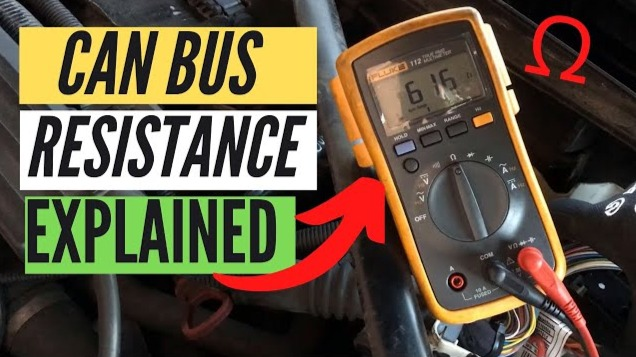
GM transmissions often use a dedicated set of CAN High and CAN Low wires that branch out to the Power Steering Module and Engine Control Module before joining the rest of the network.
In this case:
- CAN signals at the transmission were clean.
- Voltage levels were correct.
- No shorts to power or ground
- Waveforms had no outliers or dropouts.
- But the scan tool still could not communicate with the TCM.
This combination tells you one thing:
The TCM is sending data, but the data is not reaching the other modules. Somewhere between the TCM and the ECM, the message is getting lost.
The Real Cause: Poor Pin Tension From a Previous Repair
After tracing the circuit upstream and checking the CAN lines at the ECM, the data packets were no longer present. The harness showed no physical damage, so focus shifted to the connectors.
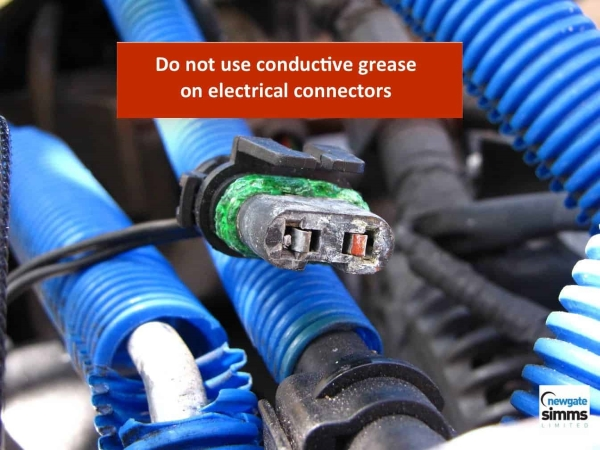
This vehicle had been worked on before, and someone had packed the TCM connector with a large amount of dielectric grease.
Why this matters:
Dielectric grease does not compress. When a connector is slammed full of grease, the terminals cannot fully seat. Instead of sliding together, the grease forces the pins apart or prevents the terminals from locking securely.
The result:
- Weak pin contact
- Raised terminal resistance
- Intermittent or missing CAN signals
- No communication with the module (even though the module itself was fine).
After we had corrected the pin tension and removed the excess grease, the CAN signal reappeared at the ECM. The scan tool immediately connected to the TCM. The repair did not require replacing or programming a module; the connector was the only issue.
How We Diagnosed It: Step-by-Step
- Verified power, ground, and CAN signals at the TCM- Waveforms were correct. This ruled out a failed module or a bad transmission harness.
- Tested the CAN pair toward the ECM- Pins 39 and 40 at the ECM should have shown matching data, but they did not.
- Inspected the connectors between modules- The harness was intact, so the failure had to be at a connector.
- The TCM plug was clogged with dielectric grease- We cleaned and retensioned the plug, and communication was restored.
Why This Happens More Than You Think
Dielectric grease is helpful in small amounts on weather-sealed connectors. The problem comes when it is treated like silicone caulk. Grease spreads out when the connector is closed, pushing against the terminal walls and causing:
- Poor pin engagement
- Signal interruption
- Modules losing communication
- False dead-module diagnosis
This issue is becoming more common as more vehicles use high-speed CAN and sensitive data lines.
Symptoms of Pin Tension Issues on GM CAN Systems:
- Random module no-communication
- Harsh shifting or limp mode
- CAN codes that clear and return
- Intermittent power or ground codes
- Normal voltage, but missing waveform continuity between modules
- TCM data was present at the module, but missing upstream
When you notice these signs, inspect each connector before jumping to replace the module.
How to Fix It Properly
- Do not pack with dielectric grease- this would cause the pin to expand and not make good contact. There are specialized lubricants for connectors that provide greater tension and environmental protection.
- Retension the terminals- remove the pin from the terminal and re-tension the terminal with the proper drag test pin.
- Recheck the CAN waveforms data package; the high and low CAN signals should mirror each other.
- Clear codes and test drive- Once communication is restored, the transmission will relearn and function normally.
Preventing CAN Communication Loss in the Future
- Never force a connector that does not want to seat.
- Always test both sides of the network when diagnosing no-communication issues.
Final Thoughts
Most TCM no-communication cases are misdiagnosed as dead modules, especially on GM vehicles, where the transmission harness vibrates and expands the female pins. But when the CAN waveform is clean at the module and missing at the ECM, the issue is almost always in the connector or terminals.
At Auto Service Experts, we approach every diagnostic logically and verify every circuit before recommending a part. This repair is a good reminder that even a perfect waveform at the module does not guarantee the signal is making it to the rest of the network.
If you need help with diagnostics or transmission communication issues, we are here to help with accurate testing and clear explanations.