
2017 Ford Transit Connect ABS Fault – A Complete Diagnostic Walkthrough

Correct Answer: D. All above
All of these could be the cause. In this case study, we explored all possibilities, but the root cause was an internal fault in the ABS module.
Customer Complaint:
The customer noted that the ABS and traction control lights were illuminated. Although the van drove fine, these warnings appeared as soon as the vehicle was in motion.
Initial Inspection:
We connected our diagnostic scanner and found two fault codes:
- C0051:62-68 – Steering Wheel Position Sensor
- C0031:11-2B – Front Left Wheel Speed Sensor
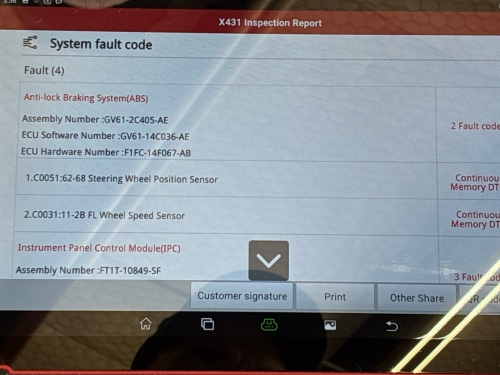
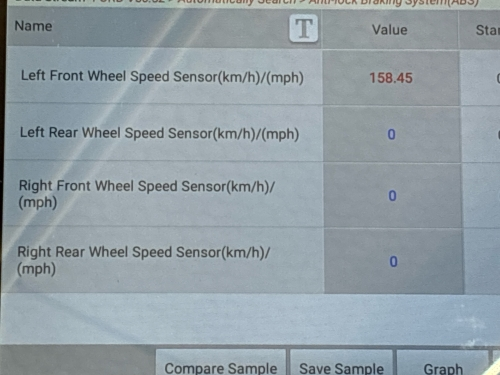
We lifted the vehicle to conduct a visual inspection and noticed that the left front wheel sensor was worn through due to the tire rubbing against the sensor harness. After the harness replacement, the codes remained present, and the speed sensor was still reading 147.0 mph.
Diagnostic Process:
We measured the voltage at the left front wheel speed sensor. Initially, it showed 12 V with no load, but it dropped to around 2.6 V when the sensor was connected. We also swapped a known good sensor from the right side, but the issue persisted.
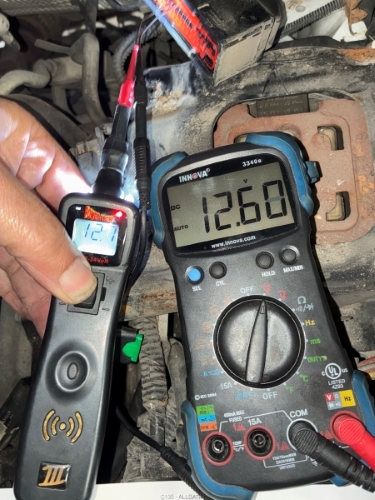
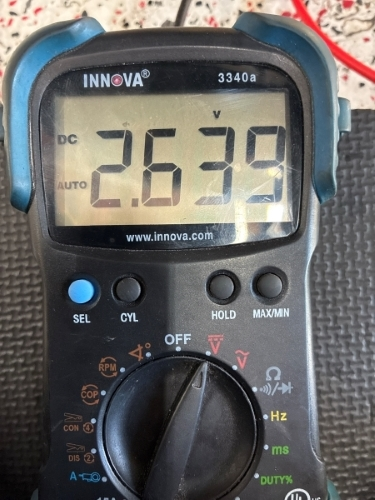
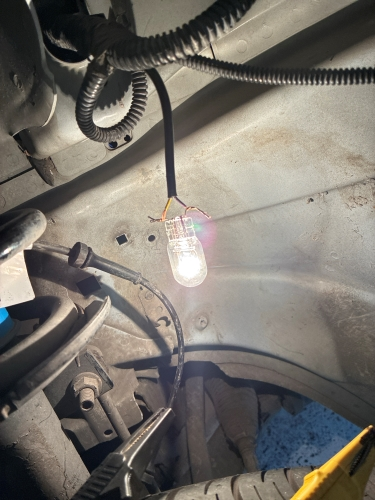
After confirming the wiring could carry a load using a test light and checking pin tension at the ABS module, we concluded that the ABS module itself was at fault.
Root Cause:
The left front wheel speed sensor channel in the ABS module was faulty. Replacing and reprogramming the ABS module resolved the issue.
Final Verification:
After installing the new ABS module, we verified that the wheel speed sensor readings were normal and that the warning lights were off during the test drive.
Why These ABS Fault Codes Occur on Ford Transit Connect Models
On the 2017 Ford Transit Connect, the ABS system relies heavily on accurate wheel speed and steering angle data to manage braking stability and traction control. When the ABS module receives inconsistent or implausible signals from a wheel speed sensor or steering position sensor, it will immediately disable stability functions and illuminate warning lights as a safety precaution.
In this case, the vehicle continued to drive normally, which is common when a single ABS channel fails internally. However, even when drivability feels unaffected, unresolved ABS faults can disable traction control, electronic stability control, and anti-lock braking functions during emergency situations.
Understanding the Relationship Between Wheel Speed Sensors and the ABS Module
Wheel speed sensors on this platform are passive components that rely on the ABS module to supply voltage and interpret signal feedback. When an internal ABS module channel fails, the sensor may appear faulty even when it is functioning correctly.
This is why voltage readings can be misleading if load testing is not performed. A sensor circuit may show proper voltage with no load, but collapse under load due to an internal module failure. Proper diagnosis requires verifying voltage behavior, circuit integrity, and load capacity before condemning any components.
Why Sensor Replacement Alone Would Not Fix This Issue
In many cases, replacing the wheel speed sensor without testing the control module leads to repeated failures and unnecessary parts replacement. When we swapped out a known good sensor, the problem remained. This verified that the problem was not in the sensor itself, but instead a control side issue.
By confirming wiring integrity, pin tension, and load capacity, we were able to confidently identify the ABS module as the root cause rather than relying on trial and error repairs.
Importance of Proper ABS Module Programming
Ford vehicles use integrated control modules that require platform specific diagnostics and programming, which is why ABS and traction control issues are best handled by a shop experienced in Ford repair and diagnostics. Failure to properly program the replacement module can result in additional warning lights, communication faults, or incomplete system operation.
After replacement, the module must be correctly configured to the vehicle so that steering angle data, wheel speed inputs, and stability control logic function together as designed by the manufacturer.
Symptoms of Similar ABS Failures
- ABS and traction control indicators appear once in motion
- No noticeable change in braking during normal driving
- Stability control disabled during slippery or emergency conditions
- Fault codes returning even after sensor replacement
These symptoms require prompt diagnostics by a certified brake specialist mechanic near you. Because the ABS system plays a critical role in braking performance and vehicle stability, any warning lights or braking concerns should be evaluated as part of a complete brake system inspection to ensure safe operation.
Diagnostic Approach Matters More Than Parts Replacement
This case shows how important it is for a mechanic to follow a structured diagnostic approach rather than replacing parts based on fault codes alone. Control module failures can mimic sensor faults, and only proper testing can distinguish between the two.
Accurate diagnostics save time, reduce repeat repairs, and ensure the vehicle is returned to the customer with all safety systems functioning correctly.