
Staying aware of how your vehicle operates day-to-day helps reduce repair surprises and improve long-term reliability. For drivers in San Antonio who rely on their cars for work, family schedules, and daily errands, paying attention to early warning signs can prevent inconvenient breakdowns and costly service visits.
Car repair monitoring focuses on recognizing changes in performance, dashboard alerts, service intervals, and physical warning signs before they turn into larger problems. With steady driving conditions, long commutes, and seasonal heat, vehicles in South Texas experience added strain that makes regular monitoring especially important.
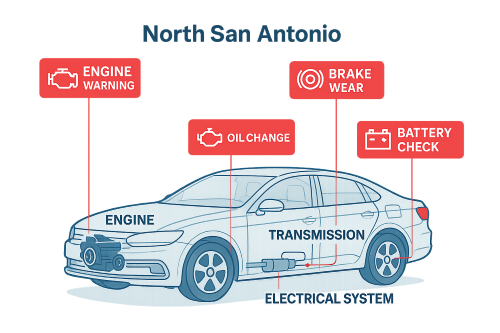
By checking off these car repair monitoring basics is how local drivers can stay informed, recognize problems early, and work with a trusted repair shop when professional service is needed.
Understanding Car Repair Monitoring Basics and Why It Matters Locally
Car repair monitoring means staying alert to changes in how your vehicle feels, sounds, and responds over time. This approach allows drivers to act early rather than reacting after a breakdown occurs. Small issues often appear gradually, giving drivers time to schedule service before safety or reliability is affected.
San Antonio driving conditions add specific challenges. High temperatures can stress cooling systems, batteries, and fluids. Stop-and-go traffic increases wear on brakes and transmissions. Longer highway drives place steady demand on engines and suspension systems. Monitoring your vehicle helps offset these conditions.
Paying attention does not require advanced mechanical knowledge. It involves noticing patterns such as slower starts, longer stopping distances, dashboard messages, fluid smells, or unfamiliar noises. When these signs appear, professional inspection helps confirm the cause and prevent escalation.
Drivers who practice consistent car maintenance monitoring often experience fewer roadside issues, improved fuel economy, and longer vehicle life. It also allows repair shops to plan service accurately instead of addressing emergency failures.
Dashboard Alerts, Warning Lights, and Performance Changes
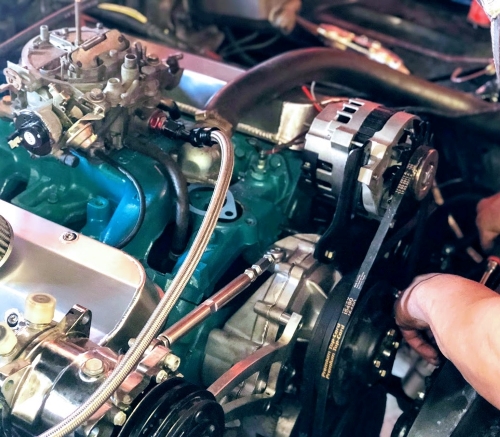
Dashboard warning lights exist to alert drivers when systems fall outside normal operating ranges. Having the check engine light on is one of the most common alerts and one of the most misunderstood. It may indicate something simple, such as a loose gas cap, or something more involved related to engine operation or emissions.
Other indicators deserve equal attention. ABS lights, battery warnings, oil pressure alerts, and temperature warnings all signal systems that require inspection. Ignoring these lights often results in reduced performance or additional system damage.
Not all problems trigger dashboard alerts. Drivers should also pay attention to physical changes such as:
- Unusual engine noises or knocking
- Vibrations at idle or highway speeds
- Delayed acceleration or rough shifting
- Burning smells or visible fluid leaks
- Decreased fuel efficiency
These symptoms often appear before a warning light activates. Addressing them early supports safer driving and avoids secondary damage.
When alerts or changes appear, scheduling a diagnostic visit with a certified repair shop helps identify the cause accurately. Modern vehicles rely on integrated systems that require proper testing rather than guesswork.
The Value of Accurate Diagnostics and Professional Evaluation
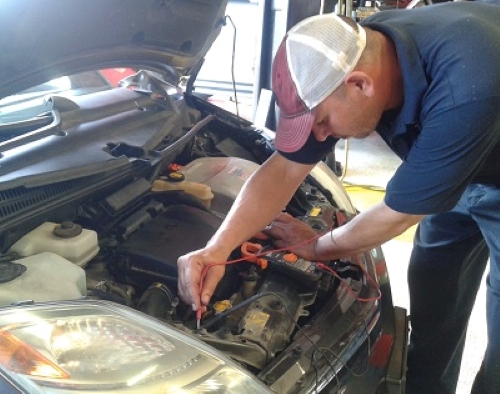
Effective car repair monitoring depends on accurate diagnostics. Replacing parts without identifying the source of a problem often leads to repeat visits and unnecessary expense. A professional diagnostic process combines digital testing with physical inspection and real-world experience.
Certified technicians use scan tools, live data readings, and system testing to confirm faults. They evaluate wiring, sensors, mechanical components, and system communication to determine why a problem is occurring, not just where a code appears.
This approach supports reliable repairs by:
- Identifying root causes instead of symptoms
- Preventing repeat service visits
- Providing clear repair priorities
- Reducing downtime for daily drivers
Accurate diagnostics are especially important when dealing with intermittent problems. Some issues only occur under specific driving conditions, making professional evaluation necessary for proper resolution.
Working with an experienced shop in San Antonio allows drivers to receive honest assessments based on vehicle condition, driving habits, and long-term reliability goals.
Transparent Repair Processes Build Driver Confidence
Clear communication plays a major role in car repair monitoring. Drivers should understand what is being inspected, what issues are present, and what service is recommended. Transparency helps vehicle owners feel informed rather than pressured.
A straightforward repair process typically includes:
- Listening carefully to driver concerns
- Explaining diagnostic results in plain language
- Providing written estimates before work begins
- Clarifying which services address safety and which can be scheduled later
Digital inspection reports, photos, and phone updates allow drivers to stay informed throughout the process. This approach reduces confusion and supports confident decision-making.
San Antonio drivers often juggle work schedules, school drop-offs, and family responsibilities. Clear timelines and honest updates help minimize disruption while maintaining trust between the driver and repair team.
When communication remains open, drivers are more likely to maintain regular service schedules and address issues early.

Car Maintenance: When to Schedule Service and How to Stay Proactive
Car repair monitoring works best when drivers respond promptly to signs of change. Waiting until a vehicle becomes unreliable often increases repair time and cost. Scheduling service early allows technicians to address concerns while systems are still operating.
Drivers should consider scheduling an inspection when:
- A warning light remains on or flashes
- Performance changes persist beyond a day or two
- Fluids require frequent topping off
- Noises or vibrations become consistent
Routine inspections also play an important role. Even when no symptoms are present, professional and efficient evaluations help identify wear items before failure occurs. Monitoring fluid levels regularly, checking service intervals, and following manufacturer guidelines all support dependable driving.
For San Antonio drivers seeking a trusted repair partner, working with a locally established shop provides peace of mind. A team that understands regional driving conditions can offer guidance that fits both the vehicle and the environment.
If your vehicle shows signs that something feels off, scheduling a professional evaluation helps protect your investment and keeps you driving safely across San Antonio roads.