
Torque Converter Failure | Auto Service Experts
If your vehicle shudders at highway speed, slips during acceleration, makes a whining noise at idle, or suddenly loses all drive, your torque converter may be failing. Torque converter failure produces some of the most misdiagnosed symptoms in automatic transmission repair: shudder is mistaken for engine misfires, slipping is blamed on clutch packs, and whining is attributed to the transmission pump. Torque converter problems are commonly reported on Ford, Chevy, Dodge, Toyota, Honda, and Nissan vehicles.
At Auto Service Experts in San Antonio, our ASE-certified technicians use stall speed testing, live torque converter clutch monitoring, and hydraulic pressure analysis to identify the exact failure mode before any parts are replaced.
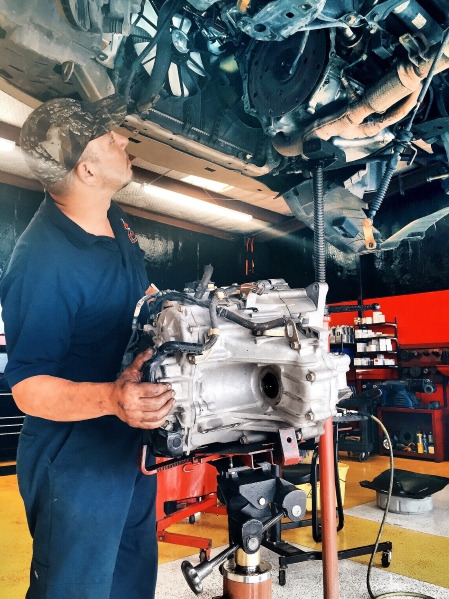
Diagnostic Overview
This page is part of the Transmission Diagnostic Support Series at Auto Service Experts. If your vehicle is producing symptoms that point to the torque converter, our ASE-certified technicians identify the exact failure mode before any parts are ordered.
The torque converter is the fluid coupling between the engine and the automatic transmission. It transfers engine torque to the transmission input shaft during acceleration, multiplies torque at low speeds, and locks up mechanically at highway speeds to improve fuel economy. When the torque converter fails, whether through internal clutch wear, stator damage, fluid contamination, or pump drive failure, the symptoms affect the vehicle’s ability to accelerate, cruise, and in severe cases, move at all.
Torque Converter Failure: Diagnostic Snapshot
Diagnostic Snapshot: When torque converter failure is suspected, diagnosis begins with a stall speed test to evaluate converter coupling efficiency, live torque converter clutch command and slip monitoring during a road test, and hydraulic pressure verification at the converter circuit before any components are replaced.
For complete transmission system coverage, visit our main Transmission System Authority Hub.
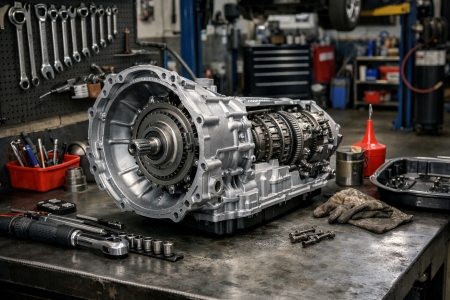
What Drivers Typically Feel
When a torque converter is failing, drivers commonly report:
- A shudder or vibration felt at highway speed during light throttle, typically between 40 and 55 mph
- Slipping or RPM surge during acceleration that does not correspond to a gear change
- A whining or humming noise at idle or low speed that increases with engine RPM
- Delayed engagement or weak acceleration from a stop
- Transmission warning light or check engine light with torque converter clutch fault codes
- Complete loss of drive in severe cases when the converter coupling has failed entirely
Why Proper Diagnosis Matters
Torque converter symptoms overlap significantly with clutch pack wear, engine misfires, and solenoid faults. A shudder that occurs specifically during torque converter lockup can be misdiagnosed as engine misfire if both systems are not monitored simultaneously. A converter that slips during lockup generates the same RPM-versus-speed disconnect as a worn clutch pack. Without stall testing and live converter clutch monitoring, confirming the converter as the fault source is not possible.
At Auto Service Experts, Carlos Rodriguez and our ASE-certified technicians perform proper torque converter evaluation including stall speed testing, live TCC command and slip data monitoring, hydraulic pressure testing at the converter circuit, and fluid condition analysis. Accurate diagnosis prevents unnecessary internal transmission disassembly when only the converter requires replacement.
Common Verified Torque Converter Failure Modes

Torque Converter Clutch Shudder
The torque converter clutch locks the converter mechanically at highway speeds. When the clutch friction material wears or the fluid loses its friction modifier properties, the clutch engages and releases rapidly rather than smoothly, producing a shudder at steady highway speed during light throttle, confirmed through live TCC command monitoring and slip data during a road test.

Torque Converter Clutch Slip
A worn or failed TCC allows the converter to slip during lockup, causing RPM to rise independently of vehicle speed at highway cruising conditions. This produces the same symptom as transmission slipping but occurs only at specific highway speeds, confirmed through TCC slip data monitoring and stall speed comparison.

Stator Damage or One-Way Clutch Failure
The stator is the internal component that redirects fluid flow to multiply torque at low speeds. A failed stator one-way clutch allows the stator to spin freely in both directions, reducing torque multiplication and causing poor acceleration from a stop with no improvement under load, confirmed through stall speed testing against manufacturer specification.

Internal Fluid Contamination
Torque converter failure often generates metallic debris and friction material that contaminates the transmission fluid. Contaminated fluid then damages solenoids, valve body bores, and clutch packs throughout the transmission, confirmed through fluid condition inspection and debris analysis.

Pump Drive Failure
The torque converter drives the transmission pump through a mechanical connection at the converter hub. A failed pump drive prevents the transmission pump from generating any hydraulic pressure, resulting in complete loss of drive, confirmed through hydraulic line pressure testing at idle.

Converter Seal Failure
The torque converter front seal prevents fluid from escaping at the converter-to-transmission interface. A failed seal produces a fluid leak at the front of the transmission and can lead to fluid starvation if not addressed, confirmed through UV dye testing and front seal inspection.
Professional Torque Converter Failure Diagnostic Process
Our ASE CodeLogic diagnostic workflow includes:
ASE CodeLogic Diagnostic Protocol
- Verify customer concern and document symptom speed, throttle condition, and onset pattern
- Retrieve stored and pending fault codes from both engine and transmission control modules
- Review freeze-frame data for TCC performance and slip fault codes
- Perform hydraulic line pressure test at idle and in gear
- Perform torque converter stall speed test and compare against manufacturer specification
- Conduct a road test with live TCC command, slip, gear ratio, and pressure data monitored simultaneously
- Replicate shudder or slip condition and confirm TCC engagement status at moment of symptom
- Inspect transmission fluid condition for metallic debris and friction material contamination
- Confirm repair scope and perform post-repair road test with TCC monitoring to verify smooth lockup
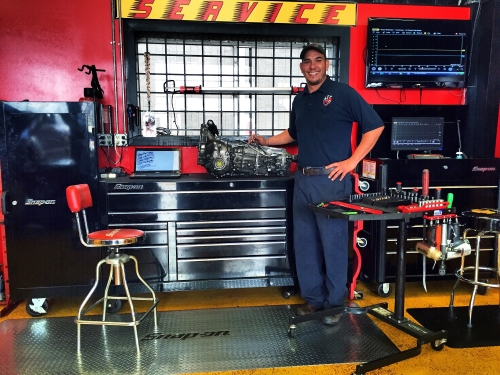
The torque converter is confirmed as the fault source before any disassembly is performed.
Parts Commonly Replaced After Torque Converter Failure Diagnosis
Torque Converter Assembly
The torque converter is replaced as a complete unit when internal clutch wear, stator failure, pump drive damage, or fluid contamination is confirmed. Individual internal components are not serviceable in the field. Converter replacement includes a complete fluid and filter service to remove contamination.
Transmission Fluid and Filter
Torque converter failure almost always contaminates the transmission fluid with friction material and metallic debris. A complete fluid and filter service is mandatory whenever a converter is replaced to prevent the new converter and internal transmission components from being damaged by residual contamination.
Torque Converter Front Seal
The front seal is replaced whenever the torque converter is removed, as the seal is exposed during removal and reinstallation. A new seal prevents fluid loss at the converter interface after reassembly.
Transmission Solenoids
If contaminated fluid from converter failure has damaged solenoid screens or solenoid valve bores, affected solenoids are replaced during the converter service to prevent repeat failures.
Valve Body
In cases where extended converter failure has allowed contaminated fluid to circulate through the valve body, valve body cleaning or replacement is performed to remove debris from pressure circuits and check ball seats.
Transmission Control Module Software Update
After torque converter replacement, a transmission control module software update is performed when available to ensure the module’s TCC engagement and slip parameters are calibrated to the new converter specification. Each component is replaced only after structured diagnostic verification confirms it as part of the converter failure scope.
What Torque Converter Failure Is Not
Torque converter failure symptoms are frequently misidentified. Proper differential diagnosis separates them from:
Engine Misfire at Highway Speed
An engine misfire at highway RPM produces a shudder that feels nearly identical to TCC shudder. The distinction is that TCC shudder occurs specifically during converter lockup at a consistent speed under light throttle, while engine misfire shudder occurs across a broader RPM range. Live TCC command data monitored during the shudder event confirms which system is responsible.
Transmission Clutch Pack Slipping
Clutch pack slipping and TCC slip both produce an RPM-versus-speed disconnect, but clutch pack slipping occurs during gear changes and acceleration, while TCC slip occurs at steady highway speed during lockup. Live gear ratio and TCC slip data separate these conditions during a road test.
Transmission Fluid Shudder
Fluid that has lost its friction modifier properties causes TCC shudder that is chemically rather than mechanically induced. In these cases, a fluid and filter service with the correct fluid specification resolves the shudder without converter replacement. Confirmed by performing a fluid service and road test before recommending converter replacement.
Speed and Condition-Specific Torque Converter Failure Diagnosis
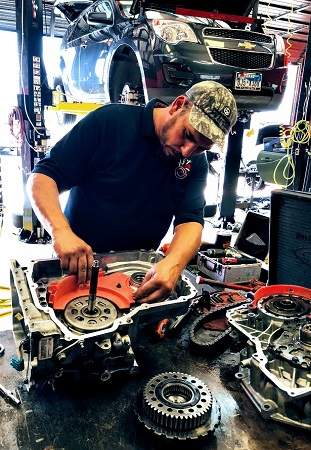
Torque converter failure symptoms are highly specific to speed, throttle position, and operating temperature, which provides precise diagnostic information.
- Shudder Between 40 and 55 MPH Under Light Throttle: The shudder occurs at the exact speed where the TCC engages and is absent above or below that speed range. Confirmed through live TCC engagement monitoring at that speed.
- Shudder Disappears When Accelerating or Decelerating: TCC shudder that stops immediately when the throttle is pressed or released confirms the TCC as the source. The clutch releases under load and reengages during steady cruise, producing the shudder at the transition point.
- Poor Acceleration From a Stop With Normal Highway Performance: Weak acceleration from rest with normal performance once underway points to stator one-way clutch failure reducing torque multiplication at low speeds. Confirmed through stall speed testing.
- Whining Noise That Increases With RPM at Idle: A whining or humming noise that tracks engine RPM at idle or low speed points to converter bearing wear or internal fluid aeration from a failing pump drive. Confirmed through stall testing and fluid condition inspection.
- Complete Loss of Drive After Extended Highway Operation: A converter that fails completely after highway driving, particularly with a burning smell, indicates TCC friction material disintegration and fluid contamination that has caused hydraulic pressure loss. Requires immediate internal inspection.
Diagnosis requires stall speed testing, live TCC monitoring during a road test, and fluid condition evaluation.
Safety Considerations
A torque converter that is shuddering or slipping during highway operation affects vehicle stability and fuel economy but typically does not create an immediate safety emergency. However, a converter that is actively contaminating the transmission fluid is causing progressive damage to solenoids, clutch packs, and the valve body with every mile driven.
A converter that has failed completely, resulting in no drive, should not be operated under any circumstances, as attempting to force movement causes further internal damage. If the vehicle loses drive suddenly while on the road, pull safely to the side, shift to park, and do not attempt to re-engage.
Drivers in San Antonio experiencing TCC shudder, highway slipping, or a whining noise should schedule diagnosis promptly to prevent secondary damage from fluid contamination. When you call, note the speed at which the shudder occurs and whether it disappears when you press or release the throttle. That information helps our service team prepare the correct diagnostic approach before you arrive. In most cases, diagnostic testing is completed the same day at our San Antonio shop.
How Repeat Torque Converter Failures Are Prevented
Long-term reliability is achieved by:
- Performing a complete transmission fluid and filter service with OEM-specified fluid whenever a torque converter is replaced
- Flushing the transmission cooler and cooler lines to remove debris from the converter failure before reinstalling
- Inspecting and cleaning solenoid screens for metallic debris before transmission reassembly
- Verifying smooth TCC engagement with live slip data during a post-repair road test
- Updating transmission control module TCC calibration software when applicable
- Performing transmission fluid condition checks at every oil service interval to detect early signs of converter wear before complete failure occurs
Final verification with clean TCC slip data on a post-repair road test confirms smooth converter lockup before the vehicle leaves the shop.
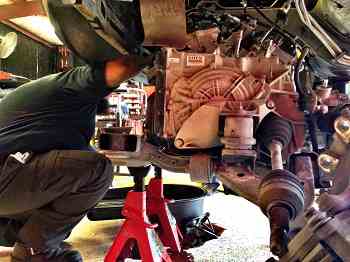
Real Diagnostic Case Study: Ice Cream Truck Stalling After Extended Operation
A commercial ice cream truck came in with a concern that only appeared after about an hour of driving — the engine would die at stoplights with no warning and no obvious cause. Short trips showed nothing. The problem only surfaced after the vehicle had been running long enough to build heat.
We connected the scan tool and drove the vehicle with live data running across both engine and transmission systems simultaneously. What we found was a brake light switch that was not sending a proper signal to the transmission control module. Without that signal, the torque converter clutch never received the command to disengage when the driver pressed the brake pedal. The TCC stayed locked. At highway speeds that goes unnoticed, but every time the truck slowed for a stoplight, the locked converter was forcing the engine to lug against a mechanically coupled drivetrain instead of releasing cleanly. After an hour of stop-and-go operation on a commercial route, the transmission fluid temperature climbed to the point where the system could no longer manage it and the engine stalled to protect itself.
The fix was a brake light switch. Not a transmission. Not a torque converter. Live data during a road test that replicated the actual operating conditions of the vehicle, a full hour of driving, is what made the correct diagnosis possible.
Related Transmission Symptoms
- Transmission Slipping – Diagnosis of clutch pack wear, solenoid faults, and hydraulic pressure loss causing gear slip under acceleration.
- Car Revs but Won’t Move – Diagnosis of complete torque converter failure, total hydraulic pressure loss, and forward clutch pack failure.
- Engine Problems That Feel Like Transmission Issues – Diagnosis separating engine misfires, sensor faults, and vacuum leaks from transmission symptoms.
- Check Engine Light With Transmission Code – Diagnosis of electronic, solenoid, and software faults triggering transmission-related fault codes.
- Transmission Fluid Leak Under Car – Inspection of pan gaskets, cooler lines, seals, and torque converter seal integrity causing fluid loss.
Frequently Asked Questions: Torque Converter Failure
What does torque converter failure feel like?
The most common symptom is a shudder or vibration at highway speed during light throttle, typically between 40 and 55 mph. Other symptoms include slipping or RPM surge during acceleration, a whining noise at idle, and in severe cases complete loss of drive.
Can I drive with a failing torque converter?
If the converter is shuddering but the vehicle is otherwise drivable, it can typically be driven short distances to a shop. However, continued driving with a failing converter contaminates the transmission fluid and causes progressive damage to internal components. The vehicle should be diagnosed as soon as possible.
How do I know if the shudder is the torque converter or an engine misfire?
TCC shudder occurs at a specific highway speed during light throttle and disappears when you accelerate or decelerate. Engine misfire shudder occurs across a broader RPM range and is not limited to a specific speed. Live TCC command monitoring during the shudder event confirms which system is responsible.
Does torque converter failure always require a full transmission rebuild?
No. In many cases, the torque converter can be replaced without internal transmission disassembly if the failure is caught before contaminated fluid causes secondary damage. Early diagnosis is the key factor in avoiding a full rebuild.
Why does my car shudder only at a specific speed?
Shudder at a specific highway speed, typically 40 to 55 mph, is the signature symptom of torque converter clutch shudder. The TCC engages at that speed range and the worn or contaminated clutch friction surface produces a rapid engage-release cycle that the driver feels as a shudder.
How much does torque converter replacement cost?
Cost depends on the extent of the failure and whether secondary transmission damage from fluid contamination requires additional repairs. A converter replacement with a fluid service differs significantly in cost from a converter replacement combined with solenoid or valve body repair. Diagnostic testing determines the full scope before any repair is authorized.
Torque converter symptoms in San Antonio?
Call 210-495-6688. Carlos and the team identify the exact failure mode before any parts are ordered.