
Nissan & Infiniti Transmission Repair | San Antonio TX
If your Nissan & Infiniti is shuddering, hesitating, jerking, or has lost drive entirely, you have probably already heard the worst-case scenario from someone — that CVTs cannot be repaired and replacement is the only option. That is not always true, and it is never the right answer before a proper diagnosis has been performed.
Nissan’s CVT has one of the highest documented failure rates of any transmission platform in the current market — affecting the Altima, Rogue, Sentra, Versa, Pathfinder, Murano, Maxima, Infiniti QX60, and Q50. But not every shudder is a failed CVT, and not every failed CVT requires replacement. Carlos Rodriguez and our ASE-certified team use Nissan and Infiniti-specific diagnostic procedures to identify the exact failure mode before any recommendation is made — including an honest assessment of whether repair or replacement is the right path for your vehicle.
Learn more about our San Antonio transmission repair shop.
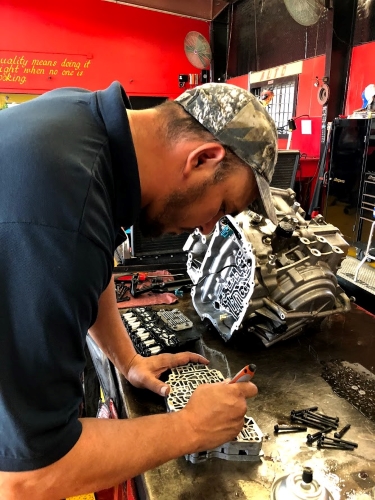
Nissan & Infiniti – Diagnostic Overview
Nissan and Infiniti vehicles fall into two completely different transmission categories — and that distinction determines everything about how a fault is diagnosed. The majority of Nissan passenger cars and crossovers built after 2007 use a continuously variable transmission rather than a traditional step-gear automatic. The CVT produces a different set of failure symptoms and requires a completely different diagnostic approach. Nissan’s full-size trucks and some Infiniti performance models use step-gear automatics — the RE5R05A and RE7R01A — which have their own confirmed failure patterns.
Diagnostic Snapshot
Nissan and Infiniti transmission diagnosis begins with identifying whether the vehicle uses a CVT or a step-gear automatic, followed by full fault code retrieval, live data monitoring using Nissan CONSULT-level scan data, and fluid condition evaluation. Nissan CVT failures are often progressive — early intervention with a CVT fluid service and software update can prevent complete failure on vehicles presenting early symptoms. If your Nissan has been told it needs a full CVT replacement, accurate diagnosis frequently tells a different story.
The sections below cover the confirmed failure patterns for both platforms, which models are affected, and how structured diagnostic testing determines the correct repair path before any parts are replaced. For transmission repair costs and replacement considerations visit our transmission repair cost guide.
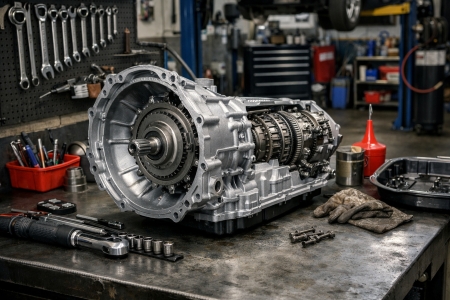
What Nissan & Infiniti Owners Typically Experience
Nissan & Infiniti transmission problems most commonly reported by owners include:
- Shuddering or shaking during acceleration from a stop
- Hesitation, surging, or a rubber-band sensation during acceleration at highway speed
- CVT overheating warning light or transmission warning light illuminated
- Sudden loss of drive with the engine still running
- Harsh engagement or slipping on Pathfinder, Murano, and QX60 models
- Whining, humming, or grinding noise during acceleration — indicates internal CVT belt or bearing wear
- Erratic shifting or limp mode on RE5R05A-equipped Frontier, Xterra, and Pathfinder models
Why Nissan & Infiniti -Specific Diagnosis Matters
If your Nissan or Infiniti has been quoted a full CVT replacement, that recommendation should not be accepted before an accurate diagnosis is completed. Nissan CVT diagnosis requires a completely different approach than conventional automatic transmission diagnosis. The CVT uses a steel push belt and two variable-diameter pulleys to provide a continuously changing drive ratio — there are no fixed gear ratios. Belt wear, pulley wear, valve body faults, and control module faults each produce overlapping symptoms that require CONSULT-level live data to separate. Replacing a CVT without confirming whether the fault is electronic, hydraulic, or mechanical — and whether a software update has been applied — results in premature failure of the replacement unit.
At Auto Service Experts, every Nissan and Infiniti transmission diagnostic begins with platform identification, CVT or step-gear determination, CONSULT-level fault code retrieval, and CVT fluid condition evaluation before any repair recommendation is made.
Common Nissan & Infiniti Transmission Problems by Platform
JF011E CVT — Continuously Variable Transmission Altima, Rogue, Sentra, Pathfinder, Murano, Maxima, Infiniti QX60 (2007–Present)
If your Altima, Rogue, or Murano shudders during acceleration or surges at highway speed, this is the platform responsible in most cases. The JF011E is Nissan’s most widely deployed CVT and the most frequently diagnosed transmission at our shop. Confirmed failure modes include steel push belt wear, pulley wear producing ratio control faults, valve body solenoid failure, and CVT fluid degradation accelerating all of the above. One detail most shops miss — contaminated CVT fluid destroys the replacement unit if the cooler and lines are not fully flushed before installation. CONSULT live ratio data, belt slip monitoring, and fluid condition analysis confirm the fault before any repair is recommended.
RE5R05A — Five-Speed Automatic Frontier, Xterra, Pathfinder V8, Armada, Infiniti QX56, FX45 (2004–2012)
If your Frontier, Armada, or Infiniti QX56 is slipping into limp mode or shifting erratically, the RE5R05A is the platform to evaluate first. Solenoid pack wear, governor pressure faults causing erratic shifts and limp mode, and torque converter clutch shudder are all confirmed failure patterns. This transmission requires Nissan Matic-D or Matic-S fluid — using the wrong specification causes solenoid swelling and accelerated valve body wear. Solenoid resistance testing, hydraulic pressure analysis, and governor pressure circuit evaluation confirm the fault before any repair is recommended.
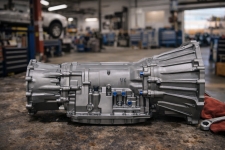
RE7R01A — Seven-Speed Automatic Infiniti Q50, Q60, QX70, Nissan GT-R (2007–Present)
Performance Infiniti and GT-R owners expect a transmission that matches the vehicle — which is exactly why valve body wear, solenoid faults under high-performance use, and torque converter clutch shudder at highway speed catch them off guard. The RE7R01A is a robust unit but these are confirmed failure patterns, particularly on higher-mileage examples driven hard. Live solenoid monitoring, hydraulic pressure testing, and TCC slip data analysis confirm the fault before any repair is recommended.
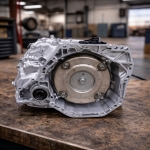
CVT7 and CVT8 — Newer Generation CVT Rogue, Altima, Kicks, Murano (2015–Present)
The CVT7 and CVT8 share the same fundamental architecture as the JF011E with updated software and hardware — but the same failure patterns apply. Belt and pulley wear at higher mileage, solenoid faults, and CVT overheating under sustained highway driving or towing are all confirmed. Nissan has issued TCM software updates addressing shift quality and overheating on these platforms — verifying current software is always the first diagnostic step. CONSULT live ratio monitoring and CVT fluid condition evaluation confirm the fault before any repair is recommended.
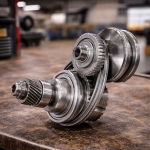
CVT Overheating — Pathfinder, Murano, Infiniti QX60
If you tow, drive mountain roads, or run your Pathfinder or QX60 at sustained highway speeds, CVT overheating is a real and documented risk on these models. Overheating accelerates belt and pulley wear dramatically and can cause complete CVT failure within a single driving event. CVT temperature monitoring and thermal load testing confirm whether overheating is occurring before internal damage is assessed. An aftermarket CVT cooler is one of the most effective preventive measures available for these models — and one of the first things we discuss with owners of these vehicles.

High-Mileage CVT Wear — All Nissan and Infiniti Platforms
Past 80,000 to 100,000 miles — significantly earlier than conventional automatic transmissions — belt wear, pulley surface degradation, and valve body solenoid failure become predictable across all Nissan CVT platforms. These wear patterns accelerate dramatically when CVT fluid has not been serviced at recommended intervals or when non-Nissan-specified fluid has been used. Belt slip monitoring and internal inspection confirm whether the fault is fluid-related or mechanical before any repair decision is made.
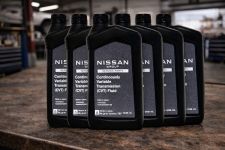
Nissan & Infiniti | JF011E | CVT Shudder
Owner reported shudder during acceleration from a stop on a 2018 Nissan Altima — present since approximately 60,000 miles and progressively worsening. Previous shop quoted a full CVT replacement. CONSULT live ratio data showed belt slip consistent with CVT fluid friction modifier breakdown rather than mechanical belt failure. Fluid condition inspection confirmed severely degraded Nissan CVT fluid well past service interval. Full CVT fluid service with Nissan-specified fluid performed. Shudder resolved on post-service road test. No CVT replacement. No parts.
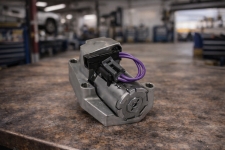
Nissan & Infiniti | RE5R05A | Limp Mode and Erratic Shifts
Owner reported erratic shifting and limp mode engagement on a 2007 Nissan Frontier — most noticeable under load during highway driving. Previous shop recommended a transmission rebuild. Solenoid resistance testing identified a failed governor pressure solenoid within the solenoid pack. Hydraulic pressure analysis confirmed no internal mechanical damage. Solenoid pack replaced. Adaptive data reset performed. Shifts returned to normal across all gears. No rebuild required.
Professional Diagnostic Process for Nissan & Infiniti Transmissions
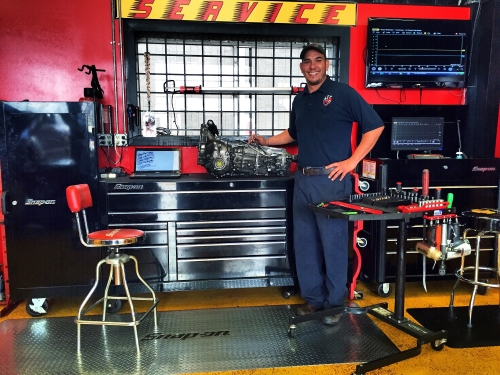
The following Nissan & Infiniti vehicles are among the most frequently diagnosed for transmission concerns at our San Antonio shop
Verified Nissan & Infiniti Diagnostic Protocol
- Identify whether the vehicle uses a CVT or step-gear automatic before any testing begins
- Inspect CVT or transmission fluid level, color, odor, and condition as the first diagnostic step
- Retrieve all stored and pending fault codes using CONSULT-level scan tool data
- Review freeze-frame data and CVT ratio performance parameters
- Perform CONSULT live CVT ratio monitoring and belt slip evaluation during a road test
- Monitor CVT temperature data under simulated operating conditions
- Perform CVT pulley pressure testing or step-gear hydraulic pressure testing based on platform
- Verify current TCM software calibration and apply Nissan software update if applicable
- Confirm repair scope — fluid service, software update, repair, or replacement — before any cost is committed
The goal is the same on every Nissan and Infiniti diagnostic — confirm the exact fault before any cost is committed. A CVT fluid service that resolves a shudder complaint costs a fraction of a replacement unit. Getting there requires the right diagnostic process, not the right guess.
Nissan & Infiniti Models Commonly Serviced
The following Nissan & Infiniti vehicles are among the most frequently diagnosed for transmission concerns at our San Antonio shop: Each vehicle is diagnosed using platform-specific procedures — CVT diagnostic protocols for CVT-equipped models and step-gear procedures for automatic-equipped models — before any repair is recommended.
Nissan Altima (2007–Present)
The Altima uses the JF011E or newer CVT8 platform. CVT shudder during acceleration, hesitation at highway speed, and CVT overheating warning are the most commonly confirmed faults. The Altima is the single most frequently diagnosed CVT vehicle at our shop.
Nissan Rogue (2008–Present)
The Rogue uses the JF011E or CVT7 platform. Shudder during acceleration and CVT belt slip are the most commonly confirmed faults. The Rogue’s CVT is particularly susceptible to overheating when used for light towing.
Nissan Pathfinder (2013–Present)
The Pathfinder’s transition from a body-on-frame SUV with the RE5R05A to a CVT-equipped crossover produced significant CVT reliability concerns. CVT overheating, shudder, and complete CVT failure are the most commonly confirmed faults on Pathfinder models from 2013 forward.
Nissan Murano (2009–Present)
The Murano uses the JF011E CVT. Shudder, hesitation, and CVT fluid degradation are the most commonly confirmed faults. The Murano is also susceptible to CVT overheating during sustained highway driving.
Nissan Sentra and Versa (2012–Present)
These compact models use the JF011E or CVT7. CVT shudder and belt slip are the most commonly confirmed faults, particularly on higher-mileage units with infrequent fluid service.
Nissan Frontier and Xterra (2004–2012)
These trucks use the RE5R05A five-speed automatic. Solenoid pack wear, governor pressure faults, and limp mode are the most commonly confirmed faults on higher-mileage units.
Infiniti QX60 (2013–Present)
The QX60 uses the JF011E CVT shared with the Pathfinder. CVT overheating, shudder, and complete CVT failure are the most commonly confirmed faults — particularly on units used for towing or operated in mountainous terrain.
Nissan Kicks (2018–Present)
The Kicks uses the CVT7 platform. CVT shudder during low-speed acceleration and belt slip on higher-mileage units are the most commonly confirmed faults. Diagnosis follows the same CONSULT-level CVT procedure used on all Nissan CVT platforms.
Nissan Armada and Infiniti QX56 (2004–2012)
The Armada and QX56 use the RE5R05A five-speed automatic. Solenoid pack wear, governor pressure faults causing erratic shifts and limp mode, and TCC shudder are the most commonly confirmed faults on these high-mileage platforms.
Infiniti Q50 and Q60 (2014–Present)
These performance sedans and coupes use the RE7R01A seven-speed automatic. Valve body wear, solenoid faults, and TCC shudder are the most commonly confirmed issues.
What Nissan & Infiniti Transmission Problems Are NOT
Nissan and Infiniti transmission concerns are frequently misidentified. Proper differential diagnosis separates confirmed transmission faults from:
a. CVT Rubber-Band Sensation Mistaken for Engine Fault
The CVT’s continuously variable ratio produces an acceleration sensation that feels different from a step-gear automatic — particularly during hard acceleration when engine RPM rises before vehicle speed catches up. This is normal CVT behavior at low mileage. When this sensation becomes pronounced, hesitant, or accompanied by shudder, it indicates CVT belt or pulley wear rather than an engine fault.
b. Engine Misfire Mistaken for CVT Shudder
A misfiring cylinder produces a shudder that can be mistaken for CVT belt shudder. The distinction is that CVT shudder typically occurs during steady acceleration from a stop while engine misfire shudder occurs at a specific RPM range across all speed conditions. Dual-system live data monitoring separates these conditions during a road test.
c. Motor Mount Failure Mistaken for CVT Vibration
A collapsed engine or transmission mount on Altima and Rogue models produces a vibration during acceleration that closely resembles CVT shudder. Mechanical inspection under load confirms or rules out mount failure before CVT diagnosis is initiated.
Symptom-Specific Diagnosis for Nissan & Infiniti Vehicles
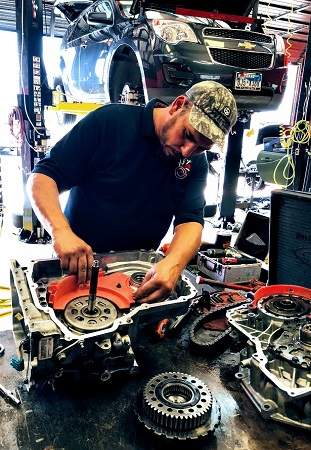
Nissan and Infiniti CVT symptoms require a completely different diagnostic approach than conventional automatic transmission faults — and the severity of the symptom determines the repair path. Here is how diagnosis is approached for the most common complaints.
- Altima, Rogue, or Murano Shudder During Acceleration From a Stop — CONSULT live ratio data and belt slip monitoring during the shudder event confirm whether the fault is mechanical or fluid-related. A CVT fluid service is performed first when fluid condition is a contributing factor.
- CVT Overheating Warning Light on Pathfinder or QX60 — CVT overheating requires immediate diagnosis. Continued driving after an overheating event causes rapid belt and pulley wear. CVT temperature data, fluid condition, and cooler circuit integrity are evaluated to determine the extent of thermal damage.
- Sudden Loss of Drive on Any CVT-Equipped Nissan — Complete loss of drive indicates belt failure, pulley seizure, or total loss of hydraulic pressure. Internal inspection is required to determine whether repair or replacement is the correct path.
- RE5R05A Erratic Shifts or Limp Mode on Frontier or Xterra — Solenoid pack resistance testing and governor pressure circuit evaluation are performed before any solenoid or valve body replacement is recommended.
- Any Nissan or Infiniti — CVT Warning Light or P0740 to P0744 — These codes indicate TCC or CVT ratio performance faults. CONSULT live data and fluid condition evaluation are performed before any parts replacement is recommended.
Diagnosis for all Nissan and Infiniti platforms requires CONSULT-level live data, CVT-specific belt and ratio monitoring, and fluid condition evaluation before any repair recommendation is made.
Nissan & Infiniti Related Transmission System Resource
This page connects directly to our transmission repair services hub and the full library of symptom-specific diagnostic pages covering Nissan and Infiniti transmission problems. Because Nissan CVT failure is often progressive, the transmission slipping and car won’t go into gear pages are particularly relevant for owners experiencing early CVT warning signs.
Carlos Rodriguez and our team apply Nissan CONSULT-level procedures to every CVT and step-gear diagnostic to confirm the correct fault and repair path before any cost is committed.
Safety Considerations
Nissan CVT problems are among the most safety-relevant transmission issues at our shop. A CVT that overheats during highway driving can fail completely without warning — leaving the driver with no drive power on a freeway. A CVT experiencing shudder during low-speed acceleration produces unpredictable power delivery in traffic and parking situations.
If your Nissan or Infiniti CVT warning light is illuminated, the vehicle is shuddering severely during acceleration, or you have experienced a sudden loss of drive, do not continue driving. Pull safely to the side of the road and contact our San Antonio shop before attempting further operation.
Nissan and Infiniti owners experiencing early CVT symptoms — mild shudder, slight hesitation, or a CVT warning light — should schedule diagnosis promptly. Early intervention with a CVT fluid service and software update frequently prevents complete CVT failure and the significantly higher cost of replacement. When you call, note whether the shudder occurs during acceleration from a stop or at highway speed, and whether a warning light is present — that information helps our service team prepare the correct diagnostic procedure before you arrive.
In most cases Nissan and Infiniti transmission diagnostic testing is completed the same day at our San Antonio shop.
Nissan & Infiniti Failures Prevention
Most premature Nissan CVT failures share a common cause — wrong fluid, missed service intervals, or a skipped procedure after repair. Preventing them requires the same platform-specific discipline as the diagnosis itself.
- Using only Nissan-specified CVT fluid — NS-2, NS-3, or the correct specification for the model year. Using any other fluid in a Nissan CVT causes rapid belt and solenoid damage
- Performing CVT fluid service every 40,000–60,000 miles rather than treating factory fill as a lifetime fluid
- Flushing the CVT cooler and cooler lines completely whenever a CVT is replaced — residual contamination destroys replacement units
- Applying all available Nissan TCM software updates before and after any CVT repair or replacement
- Installing an aftermarket CVT cooler on Pathfinder, Murano, and QX60 models used for towing or mountain driving
- Monitoring CVT temperature during any sustained high-load operation and stopping to allow cooling if the warning light illuminates
- Every Nissan and Infiniti transmission repair at Auto Service Experts follows these procedures before the vehicle leaves the shop.
Nissan & Infiniti Transmission Symptom Pages (Full Diagnostic Library)
Use these pages to research the specific symptom your Nissan or Infiniti vehicle is experiencing:
• Transmission Slipping – Diagnosis of CVT belt slip and hydraulic pressure loss — the most common progressive failure symptom on Nissan CVT platforms.
• Transmission Jerks or Bangs When Shifting – Diagnosis of harsh engagement and jolt symptoms — reported on Nissan Frontier and Xterra RE5R05A platforms.
• Car Won’t Go Into Gear or Delays Going Into Drive – Diagnosis of CVT engagement delay and loss of drive — commonly reported on Altima, Rogue, and Pathfinder CVT platforms.
• Transmission Fluid Leak Under Car – Inspection of CVT pan seals, cooler lines, and axle seals — applicable to all Nissan and Infiniti platforms.
• Car Revs but Won’t Move – Diagnosis of complete CVT failure and belt seizure — reported on Altima, Rogue, Pathfinder, and QX60.
• Check Engine Light With Transmission Code – Diagnosis of P0740–P0744 and CVT-specific fault codes on Nissan and Infiniti platforms.
• Engine Problems That Feel Like Transmission Issues – Separating engine misfires and motor mount failure from Nissan CVT shudder on Altima and Rogue.
• Torque Converter Failure – Diagnosis of TCC shudder and converter failure on Nissan RE5R05A and RE7R01A step-gear platforms.
Frequently Asked Questions About Nissan & Infiniti Transmission Problems.
Does Nissan have transmission problems?
Yes. Nissan’s CVT is one of the most documented transmission reliability concerns in the current automotive market. The JF011E CVT used in the Altima, Rogue, Pathfinder, Murano, and QX60 has a high confirmed failure rate — particularly on models operated beyond 80,000–100,000 miles without CVT fluid service. Early diagnosis and intervention significantly improve outcomes.
What does Nissan CVT shudder feel like?
Nissan CVT shudder typically feels like a vibration or trembling during acceleration from a stop — as if the vehicle is struggling to gain speed smoothly. It may also feel like a hesitation or jerking sensation at low speed. At highway speed it can feel like a mild vibration during steady cruising. The shudder usually worsens over time as belt and pulley wear progresses.
Can a Nissan CVT be repaired or does it need to be replaced?
It depends entirely on the extent of the failure. A CVT presenting early shudder symptoms with no belt wear may be resolved with a fluid service and software update. A CVT with confirmed belt wear, pulley damage, or contaminated fluid that has circulated throughout the unit typically requires replacement. Diagnostic testing determines the correct path before any cost is committed.
Does Nissan CVT fluid need to be changed?
Yes. Nissan CVT fluid degrades over time and loss of friction modifier properties is a confirmed cause of CVT shudder and belt wear. Regular CVT fluid service every 40,000–60,000 miles using the correct Nissan-specified fluid — NS-2, NS-3, or the applicable specification — is the most effective way to extend CVT life.
Why did my Nissan lose power while driving?
A sudden loss of drive power on a Nissan CVT vehicle typically indicates CVT overheating triggering a protective shutdown, complete CVT belt failure, or total loss of hydraulic pressure. If the CVT warning light came on before the power loss, overheating is the most likely cause. The vehicle should not be driven until the CVT is inspected and the cause is confirmed.
How much does Nissan CVT repair or replacement cost in San Antonio?
Cost depends entirely on the confirmed failure mode. A CVT fluid service and software update differs significantly in cost from a complete CVT replacement. Diagnostic testing determines whether repair or replacement is the correct path before any cost is committed — early diagnosis is the most effective way to reduce the total repair cost on a Nissan CVT.

Have Transmission Repair Questions?
Call 210-495-6688 now to speak with an ASE-Certified Transmission specialist or automotive service consultant.