
Toyota & Lexus Transmission Repair | Auto Service Experts
If your Toyota & Lexus has started shuddering, slipping, shifting hard, or showing a transmission code, the frustrating part is that these vehicles are not supposed to do this. Toyota and Lexus owners expect reliability, which makes transmission symptoms feel even more alarming when they appear.
What most owners do not know is that several specific transmission platforms across these vehicles — the A750E, U660E, U760E, AB60E, and AA80E — have confirmed failure patterns that require platform-specific diagnosis.
The same shudder on a Tacoma and a Camry can have completely different causes. Replacing parts before confirming the platform and the fault is the fastest way to turn a manageable repair into an expensive one.
Carlos Rodriguez and our ASE-certified team use Toyota and Lexus-specific diagnostic procedures to identify the exact fault before anything is recommended. Clear answer first. Every time. Learn more about our San Antonio transmission repair services.
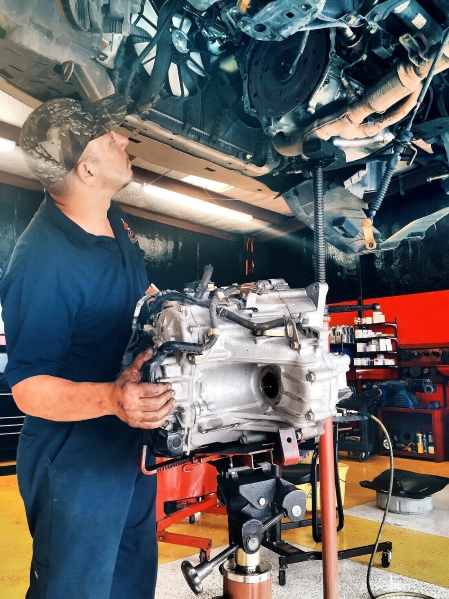
Toyota & Lexus Transmission- Diagnostic Overview
Toyota & Lexus vehicles are among the most reliable on the road, which is exactly why transmission symptoms catch owners off guard. That assumption of immunity is one of the most common reasons these repairs get delayed, and a delayed diagnosis almost always means a more expensive repair.
Toyota and Lexus also share transmission platforms across their lineups. A confirmed failure pattern on the U660E in a Toyota Camry applies equally to the Lexus ES350 running the same unit. Platform identification is not optional; it is where accurate diagnosis begins.
Diagnostic Snapshot
Toyota and Lexus transmission diagnosis begins with model year and platform identification, full fault code retrieval from the engine ECM and transmission ECU, and live data monitoring using Toyota Techstream or an equivalent professional scan tool. Toyota transmissions are particularly sensitive to fluid condition and specification — many confirmed complaints are resolved with a proper fluid service using Toyota WS fluid before any mechanical repair is needed.
The sections below cover the most common failure patterns by platform, which models are affected, and how structured diagnostic testing isolates the exact fault before any repair is recommended.
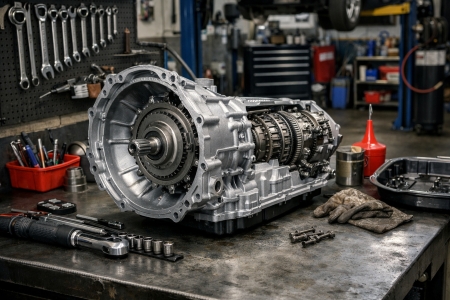
What Toyota & Lexus Owners Typically Experience
Toyota and Lexus transmission problems most commonly reported by owners include:
- Shudder or judder felt during light acceleration or at highway speed during torque converter lockup
- Delayed engagement or hesitation from park to drive, particularly after the vehicle sits overnight
- Transmission slipping or RPM surge during acceleration more common on higher-mileage units
- Harsh or clunky downshift felt during deceleration reported on Tacoma and 4Runner
- Check engine light with transmission-related fault codes P0741, P0770, P0773 most common on Toyota platforms
- Transmission warning light or flashing overdrive indicator on older Toyota models
Why Toyota and Lexus-Specific Diagnosis Matters
Toyota and Lexus transmission complaints are frequently misdiagnosed because these vehicles have a reputation for reliability that can cause both owners and technicians to look elsewhere for the cause. A shudder on a Camry or RAV4 is often attributed to the engine or tires before the transmission is evaluated. Additionally, Toyota transmissions are highly sensitive to fluid condition — using any fluid other than Toyota WS in applicable models causes accelerated solenoid and torque converter wear that produces symptoms indistinguishable from mechanical failure.
At Auto Service Experts, every Toyota and Lexus transmission diagnostic begins with fluid condition evaluation, platform identification, and Techstream-level live data analysis before any component testing or replacement is recommended.
Common Toyota & Lexus Transmission Problems by Platform

U660E and U760E — Camry, RAV4, Highlander, Sienna, Lexus ES350, RX350 (2007–Present)
The most common complaint on this platform is torque converter clutch shudder between 40 and 55 mph under light throttle. In most cases the cause is degraded Toyota WS fluid — not a mechanical failure. A fluid service with fresh WS fluid resolves the shudder without parts replacement more often than not. In higher-mileage units, solenoid wear and valve-body pressure faults are also confirmed. Diagnosis requires live TCC monitoring and inspection of the fluid condition before any component is condemned.
A750E and A750F — Tacoma, 4Runner, FJ Cruiser, Tundra (2003–Present)
Two failure patterns are confirmed on this platform. The first is a harsh clunk or shudder during deceleration at low speed — caused by torque converter clutch flutter during unlock events, not a driveline fault. The second is delayed engagement from park to drive after sitting, which points to valve-body check, ball wear, or solenoid response delays. Diagnosis requires live TCC monitoring, hydraulic pressure testing, and evaluation of cold-start engagement before any repair is recommended.
AB60E and AA80E — Tundra, Sequoia, Land Cruiser, Lexus GX, LX (2007–Present
If you tow regularly or run under heavy load, this platform has confirmed failure patterns worth knowing. Torque converter clutch shudder, solenoid wear, and valve body pressure faults are all confirmed — with pressure faults more likely to surface under towing conditions than normal driving. The AA80E also exhibits harsh cold-start shifts that smooth out as the transmission warms up. Accurate diagnosis requires live TCC monitoring, hydraulic pressure analysis, and cold-start shift evaluation before any repair is recommended.
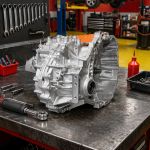
U150E and U250E — Older Camry, Avalon, Highlander, Lexus ES and RX (2002–2008)
The distinguishing failure pattern on these older platforms is shift solenoid SLT and SLS wear — causing erratic shift pressure, inconsistent engagement, and fault codes that can be misread as a major mechanical failure. Solenoid wear, valve body pressure faults, and torque converter shudder are all confirmed at high mileage. Solenoid resistance testing, hydraulic pressure analysis, and live SLT and SLS data monitoring are required to confirm whether the fault is mechanical or solenoid-related before any repair decision is made.
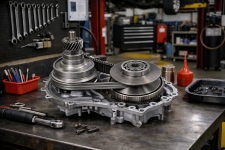
Direct Shift CVT Corolla, C-HR, Prius (2018–Present)
Toyota’s Direct Shift CVT uses a physical launch gear to reduce traditional CVT droning — but the platform has confirmed failure patterns. Belt slip under hard acceleration, fluid degradation causing shudder, and control module faults affecting ratio scheduling are all confirmed. These symptoms are frequently misdiagnosed as requiring full replacement. Belt slip monitoring, fluid condition inspection, and ratio control data analysis often identify a repairable fault before any replacement decision is made.
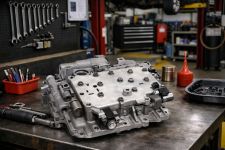
High-Mileage Wear Across All Toyota and Lexus Platforms
Past 150,000 miles, wear patterns become predictable across all Toyota and Lexus platforms. Torque converter clutch wear, solenoid linear pressure valve wear, and valve body bore degradation are all confirmed — and significantly more common when Toyota WS fluid has not been serviced at recommended intervals. Hydraulic pressure testing and live solenoid data confirm whether the fault is fluid-related or mechanical before any repair is recommended.

Toyota & Lexus | U660E | Highway Shudder
Owner reported a shudder between 40 and 50 mph under light throttle. Previous shop quoted a torque converter replacement. Fluid condition inspection showed severely degraded Toyota WS fluid with depleted friction modifiers. Live TCC monitoring confirmed engagement flutter — no mechanical fault. Full fluid service with fresh Toyota WS fluid. Shudder resolved. No converter replacement. No parts.
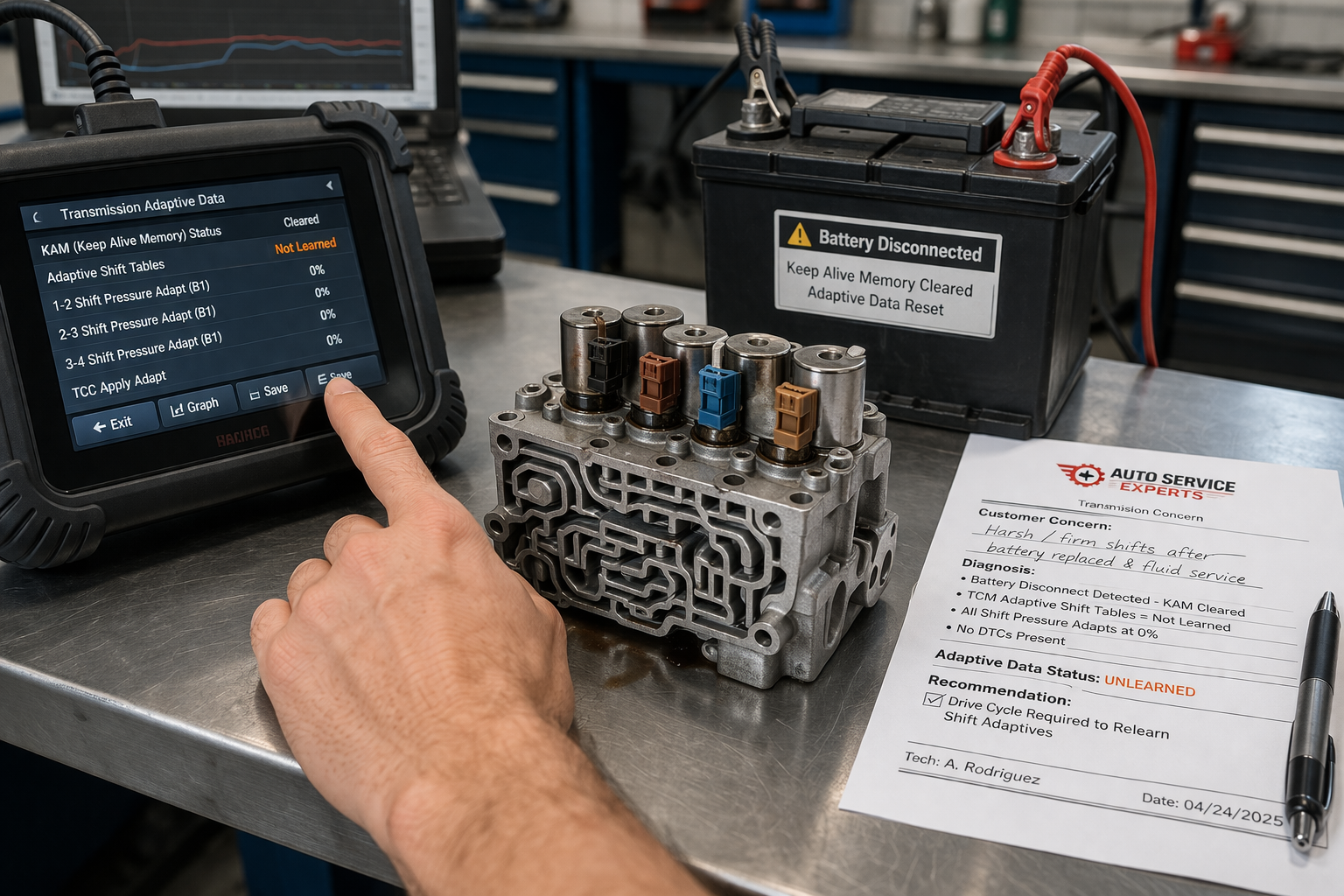
Toyota & Lexus | A750F | Delayed Engagement
Owner reported a 3 to 4 second delay engaging drive from park — most noticeable on cold mornings. Two previous shops had suggested a transmission rebuild. Cold-start engagement evaluation and hydraulic pressure testing identified worn valve body check balls causing delayed hydraulic circuit fill. No internal mechanical damage confirmed. Valve body service performed. Engagement returned to normal. No rebuild required.
Professional Diagnostic Process for Toyota & Lexus Transmissions
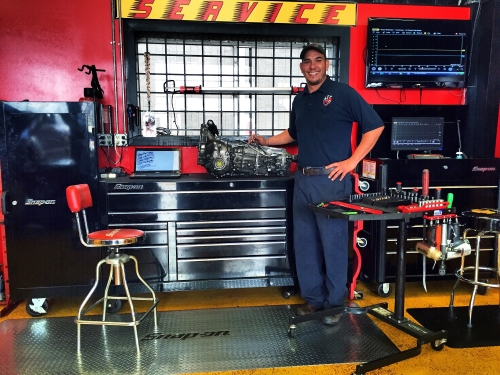
Our ASE CodeLogic diagnostic workflow for Toyota and Lexus transmissions includes:
Verified Toyota & Lexus Diagnostic Protocol
- Identify vehicle model year, engine, and transmission platform before any testing begins
- Inspect Toyota WS fluid level, color, odor, and condition as the first diagnostic step
- Retrieve all stored and pending fault codes using Techstream-level scan tool data
- Review freeze-frame data and TCC performance parameters
- Perform live hydraulic pressure test appropriate to the identified platform
- Conduct a platform-specific road test with live TCC command, slip, and solenoid data monitored simultaneously
- Perform a post-fluid-service road test before recommending mechanical repair when fluid condition is a confirmed factor
- Perform solenoid resistance and circuit integrity testing on identified fault circuits
- Confirm repair with final road test, system scan, and TCC slip data verification
The goal is the same on every Toyota and Lexus diagnostic confirm the exact fault on the correct platform before any repair is recommended. If a fluid service resolves the complaint, that is the repair. If it does not, the data tells us exactly what does.
Toyota & Lexus Models Commonly Serviced
The following Toyota and Lexus vehicles are among the most frequently diagnosed for transmission concerns at our San Antonio shop:
Each vehicle is diagnosed using model-year and platform-specific procedures before any repair is recommended.
Toyota Tacoma (2003–Present)
The Tacoma uses the A750E or A750F five-speed. Deceleration shudder, cold-start delayed engagement, and low-speed TCC flutter are the most commonly confirmed faults — particularly on Tacomas used for towing or off-road operation.
Toyota Camry (2007–Present)
The Camry uses the U660E six-speed. Highway TCC shudder is the most commonly reported symptom and is frequently resolved with a Toyota WS fluid service before any mechanical repair is needed.
Toyota RAV4 (2006–Present)
The RAV4 uses the U660E or a newer eight-speed platform depending on model year. TCC shudder and solenoid wear are the most commonly confirmed faults on higher-mileage RAV4 models.
Toyota Tundra (2007–Present)
The Tundra uses the AB60E six-speed. TCC shudder, solenoid wear under towing loads, and cold-start shift quality concerns are the most commonly confirmed faults.
Toyota 4Runner (2003–Present)
The 4Runner uses the A750E or A750F. Deceleration shudder and delayed cold-start engagement are the most commonly confirmed faults, particularly on high-mileage units used for off-road driving.
Toyota Highlander and Sienna (2007–Present)
These crossovers and minivans use the U660E. TCC shudder and solenoid wear are the most commonly confirmed faults on higher-mileage units.
Lexus ES350 (2007–Present)
The ES350 uses the U660E shared with the Camry. Highway TCC shudder is the most commonly confirmed fault and is often resolved with a fluid service before mechanical repair is needed.
Lexus RX350 (2007–Present)
The RX350 uses the U660E or a six-speed AWD variant. TCC shudder and solenoid wear are the most commonly confirmed faults on higher-mileage RX350 models.
Lexus GX460 and LX570 (2010–Present)
These full-size Lexus SUVs use the AB60E or AA80E. Solenoid wear, TCC shudder under towing loads, and cold-start shift concerns are the most commonly confirmed faults.
Toyota Corolla (2018–Present)
Newer Corollas use the Direct Shift CVT. Belt slips under hard acceleration and fluid degradation, causing shudder, are the most commonly confirmed issues.
What Toyota & Lexus Transmission Problems Are NOT
Toyota and Lexus transmission concerns are frequently misidentified. Proper differential diagnosis separates confirmed transmission faults from:
Engine Carbon Buildup Mistaken for TCC Shudder
Toyota’s direct-injection engines — including the 2.5L and 3.5L units used in the Camry and Highlander — can develop intake valve carbon deposits that cause misfires at the same RPM range as TCC shudder. Simultaneous live engine and TCC data monitoring confirms which system is responsible before any transmission service is performed.
Tire or Driveshaft Vibration Mistaken for Transmission Shudder
A vibration felt during highway cruising can originate from an out-of-balance tire, a worn driveshaft U-joint, or a fatigued axle rather than the transmission. Physical inspection of tires, driveshaft, and axles is performed before TCC shudder diagnosis is confirmed.
Toyota WS Fluid Degradation Mistaken for Mechanical Failure
This is the most important differential diagnosis on Toyota platforms. A Toyota transmission shuddering due to degraded WS fluid is not a mechanically failed transmission. Performing a fluid service with fresh WS fluid and road testing before recommending any mechanical repair prevents unnecessary parts replacement on a high percentage of Toyota shudder complaints.
Symptom-Specific Diagnosis for Toyota & Lexus Vehicles
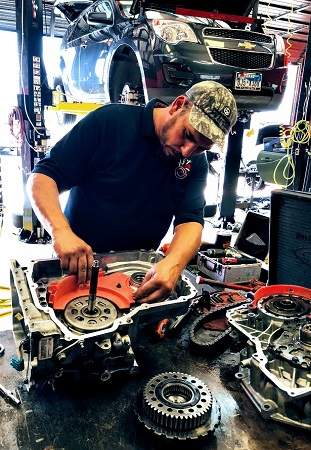
Toyota and Lexus transmission symptoms are highly sensitive to fluid condition and operating temperature, which must be evaluated before any mechanical diagnosis is performed.
- • Camry, RAV4, or Lexus ES Highway Shudder at 40–55 MPH TCC shudder on U660E platforms is first addressed with a Toyota WS fluid service and road test. If shudder persists after fresh fluid, live TCC slip monitoring and solenoid testing confirm the mechanical fault.
- • Tacoma or 4Runner Deceleration Clunk or Shudder A750E deceleration shudder is confirmed through live TCC unlock monitoring during deceleration. Solenoid response data and hydraulic pressure are evaluated before any valve body work is recommended.
- • Tundra or Sequoia TCC Shudder Under Tow Load AB60E shudder under towing is evaluated through live TCC command and slip data during a simulated load test. Fluid condition is inspected for signs of thermal degradation from towing stress.
- • Delayed Engagement After Sitting Overnight Cold-start engagement delays on A750E and AB60E platforms are diagnosed through hydraulic pressure testing at cold idle and solenoid response time evaluation before any valve body work is recommended.
- • Any Toyota or Lexus — Check Engine Light With P0741 or P0770 These are the most common Toyota transmission fault codes and indicate TCC performance or solenoid circuit faults. Fluid condition is evaluated first, followed by circuit testing and live TCC data before any parts replacement.
Diagnosis for all Toyota and Lexus platforms requires fluid condition evaluation, platform identification, and Techstream-level live data procedures.
Related Transmission System Resource
This page connects directly to our comprehensive Transmission System Authority Hub and to the full library of symptom-specific diagnostic pages that apply directly to Toyota and Lexus transmission problems. Because Toyota and Lexus transmission complaints so frequently involve fluid condition as a root cause or contributing factor, this page works closely with our transmission fluid leak page and our torque converter failure page.
Our diagnostic testing process ensures fluid condition is evaluated before any mechanical diagnosis is performed on Toyota and Lexus vehicles.
Safety Considerations
Toyota and Lexus transmission problems vary in urgency. A Camry or ES350 with TCC shudder is typically drivable and can be brought in for a fluid service evaluation before any mechanical repair is committed. A Tacoma or Tundra with delayed engagement or a transmission warning light should be diagnosed promptly — particularly if the vehicle is used for towing or hauling, where transmission stress is higher.
If your Toyota or Lexus transmission warning light is on, the overdrive indicator is flashing, or you have experienced a sudden loss of drive, pull safely to the side of the road and contact our San Antonio shop before continuing to drive. When you call, let our service team know your model year, the conditions under which the symptom occurs, and whether the vehicle has had a recent transmission fluid service — that information allows us to prepare the correct diagnostic procedure before you arrive.
In most cases, Toyota and Lexus transmission diagnostic testing is completed the same day at our San Antonio shop.
Following Toyota and Lexus platform-specific service procedures helps prevent the most common causes of repeat transmission failures across both brands.
Toyota & Lexus Failures Prevention
- Using only Toyota Genuine WS fluid or equivalent meeting Toyota WS specification — in all applicable platforms. This is the single most important factor in preventing TCC shudder and solenoid wear on Toyota and Lexus vehicles
- Performing fluid service at Toyota’s recommended intervals — Toyota WS is not a lifetime fluid, despite original factory guidance on older models
- Performing a road test after every fluid service to verify TCC shudder is resolved before the vehicle is returned
- Inspecting and cleaning solenoid screens during fluid service on high-mileage Toyota transmissions
- Monitoring transmission temperature during towing on Tundra and Sequoia to prevent solenoid and converter wear from thermal stress
- Performing a complete Techstream scan after any solenoid or valve body repair to verify all parameters are within Toyota specifications
Toyota & Lexus Transmission Symptom Pages (Full Diagnostic Library)
Use these pages to research the specific symptom your Toyota or Lexus vehicle is experiencing:
• Slipping Transmission – Clutch pack wear, solenoid faults, and hydraulic pressure loss — common on high-mileage Tacoma A750E and Camry U660E.
• Transmission Jerks or Bangs When Shifting – Harsh shift events — reported on Tacoma and 4Runner during deceleration and low-speed driving.
• Car Won’t Go Into Gear or Delays Going Into Drive- Delayed cold-start engagement — common on Tacoma, 4Runner, and Tundra with A750E and AB60E platforms.
• Transmission Fluid Leak Under Car – Inspection of pan gaskets, cooler lines, and seals — applicable to all Toyota and Lexus transmission platforms.
• Check Engine Light With Transmission Code -Codes P0741 and P0770 Toyota and Lexus transmission fault codes — the most common codes on U660E and A750E platforms.
• Car Revs but Won’t Move – Complete drive loss — reported on high-mileage Tundra and Sequoia.
• Engine Problems That Feel Like Transmission Issues – Separating Toyota direct-injection carbon buildup and engine misfires from transmission shudder on Camry and Highlander.
• Torque Converter Failure -TCC shudder and converter failure — the primary transmission concern on Camry, RAV4, Tundra, and Lexus ES and RX.
Frequently Asked Questions About Toyota & Lexus Transmission Problems.
What are the most common Toyota and Lexus transmission problems?
The most common confirmed Toyota and Lexus transmission problems are torque converter clutch shudder on the Camry and Lexus ES U660E — frequently caused by degraded Toyota WS fluid — deceleration shudder and cold-start delayed engagement on the Tacoma and 4Runner A750E, and solenoid wear on high-mileage Tundra and Sequoia AB60E platforms. Most Toyota shudder complaints are evaluated for fluid condition before any mechanical repair is recommended.
Why does my Toyota Camry or Lexus ES shudder at highway speed?
Highway shudder on the Camry and Lexus ES is most commonly caused by torque converter clutch shudder on the U660E platform. In many cases this is caused by degraded Toyota WS fluid that has lost its friction modifier properties rather than a mechanically failed converter. A Toyota WS fluid service frequently resolves the shudder without any parts replacement.
Does Toyota WS transmission fluid need to be changed?
Yes. Despite Toyota’s original guidance that WS fluid is a lifetime fill on some models, fluid degradation is a confirmed cause of TCC shudder, solenoid wear, and shift quality complaints on Toyota and Lexus transmissions. Regular fluid service with genuine Toyota WS fluid is the most effective preventive measure for these platforms.
What are the Toyota fault codes P0741 and P0770?
P0741 indicates a torque converter clutch performance fault — the TCC is not achieving full lockup as commanded. P0770 indicates a shift solenoid E malfunction. Both are among the most common Toyota transmission codes and can be caused by degraded fluid, a worn solenoid, or a failing torque converter. Fluid condition is always evaluated before any parts replacement is recommended.
Does the Toyota Tacoma have transmission problems?
The Tacoma’s A750E and A750F five-speed automatics have two well-documented issues — deceleration shudder from TCC flutter during unlock events, and delayed cold-start engagement. Both are confirmed through live TCC monitoring and hydraulic pressure testing. Many Tacoma deceleration shudder complaints are resolved through fluid service and TCC solenoid evaluation before any internal work is performed.
How much does a Toyota or Lexus transmission repair cost in San Antonio?
Cost depends entirely on the confirmed fault. A Toyota WS fluid service that resolves TCC shudder differs significantly in cost from solenoid replacement or internal clutch pack repair. Accurate platform-specific diagnosis — including fluid evaluation before mechanical testing — determines the correct repair scope before any cost is committed.
Have Transmission Repair Questions?
Call 210-495-6688 now to speak with an ASE-Certified Transmission specialist or automotive service consultant.