
Transmission Fluid Leak Under Car | Auto Service Experts
If you have noticed a reddish or brownish fluid puddle forming under your car, your transmission may be losing fluid through a failed seal, gasket, cooler line, or internal component. A transmission fluid leak left unaddressed is one of the fastest ways to cause permanent transmission damage, and fluid starvation can destroy clutch packs, solenoids, and the transmission pump within a short period of driving. Auto Service Experts provides transmission repair in San Antonio across a full range of system faults, from fluid leaks to internal mechanical failure.
Transmission fluid leaks are commonly reported on Ford, Chevy, Dodge, Toyota, Honda, and Nissan vehicles. At Auto Service Experts in San Antonio, our ASE-certified technicians locate the exact source of the leak and verify the repair before the vehicle leaves the shop.
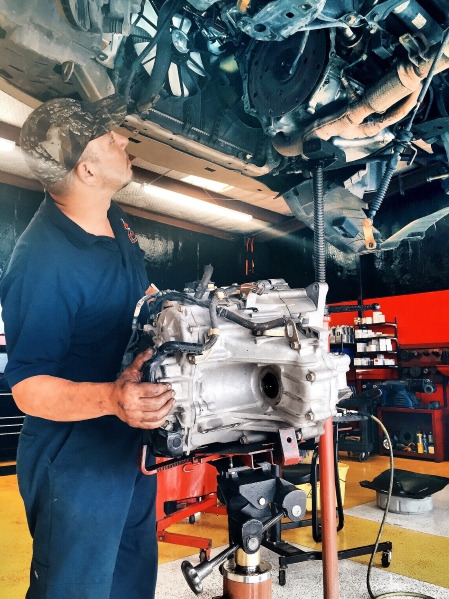
Transmission Fluid Leak Diagnostic Overview
This page is part of the Transmission Diagnostic Support Series at Auto Service Experts in San Antonio and is designed to answer one primary concern: where is my transmission fluid leaking from, and is it safe to drive?
In most cases, driving with a known transmission fluid leak is not safe. The automatic transmission depends entirely on hydraulic fluid to generate pressure, lubricate internal components, and cool the clutch packs and solenoids. A slow leak becomes a critical condition quickly once fluid drops below the minimum operating level. Even a small leak that appears minor can accelerate to a major fluid loss event under highway driving conditions or high operating temperatures.
Diagnostic Snapshot
When transmission fluid is found under the vehicle, the leak source must be visually traced and pressure-verified before any repair is performed. A single vehicle may have multiple leak points. Diagnosis begins with a fluid condition check, leak source identification using dye or pressure testing, and a determination of whether the transmission fluid level is already critically low.
This guide explains the verified sources of transmission fluid leaks, which components are involved, and how structured diagnostic inspection locates the exact leak point before any parts are replaced. For complete transmission system coverage, visit our main Transmission System Authority Hub.
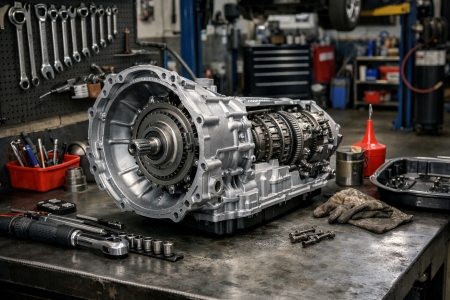
What Drivers Typically See, Smell, and Feel When Their Vehicle Has a Transmission Fluid Leak
When a transmission fluid leak is present, drivers commonly report:
- A red, pink, or dark brown fluid puddle under the center or front of the vehicle
- A burning smell after driving, caused by fluid dripping onto hot exhaust components
- Transmission slipping, delayed engagement, or harsh shifting due to low fluid level
- Transmission warning light or check engine light illuminated in some cases
- Fluid appearing on the driveway overnight after the vehicle has been sitting
- Dipstick reading low or empty on vehicles with a transmission fluid dipstick
Why Proper Diagnostics Matter When You Notice A Transmission Fluid Leak
A transmission fluid leak has multiple possible sources, and treating the wrong one wastes money and leaves the actual leak active. Rear main seals, transmission pan gaskets, cooler line fittings, torque converter seals, and axle seals all produce leaks that can appear in the same general area under the vehicle. Without dye testing and pressure verification, it is common to replace a pan gasket when the actual source is a cracked cooler line or a leaking torque converter seal.
During auto diagnostics by Certified Master Mechanics at Auto Service Experts, proper leak diagnosis includes fluid level and condition inspection, UV dye introduction, pressurized leak detection, and visual tracing of all transmission sealing surfaces. Accurate diagnosis prevents unnecessary repairs and ensures the leak is fully resolved.
Common Verified Causes Of Transmission Fluid Leaks

Transmission Pan Gasket Failure
The pan gasket seals the bottom of the transmission case to the fluid pan. Over time, heat cycling causes the gasket to harden and shrink, allowing fluid to seep along the pan rail. Confirmed through visual inspection and UV dye tracing.
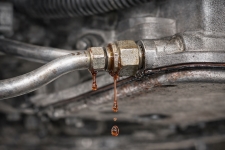
Transmission Cooler Line Leak
Transmission cooler lines carry hot fluid between the transmission and the radiator cooler. Corrosion, fitting wear, or vibration damage causes cracks or loose connections at the line fittings. Confirmed through pressurized line testing and UV dye inspection.

Front Pump Seal or Torque Converter Seal Failure
The front pump seal prevents fluid from escaping where the torque converter enters the transmission case. A failed seal produces a leak at the front of the transmission that often appears as a large fluid accumulation under the front of the vehicle. Confirmed through UV dye tracing and front seal inspection.
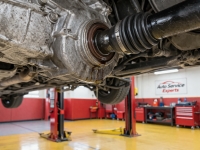
Output Shaft Seal or Axle Seal Failure
Output shaft seals and axle seals prevent fluid loss where the driveshaft or axle exits the transmission. A failed seal allows fluid to migrate along the shaft and drip from the axle or driveshaft area. Confirmed through visual inspection and UV dye testing.

Transmission Pan Drain Plug Leak
A loose, stripped, or improperly torqued drain plug on vehicles equipped with a serviceable drain plug can allow fluid to seep or drip from the base of the pan. Confirmed through visual inspection of the drain plug threads and torque verification.
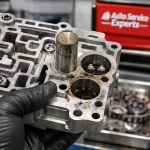
Valve Body Gasket or Internal Seal Failure
Internal gaskets and seals within the transmission case can fail and cause fluid to migrate through external case seams. These leaks are less common but confirmed through pressurized leak detection and case inspection.
Professional Diagnostic Process
At Auto Service Experts, every transmission fluid leak is evaluated through our ASE CodeLogic diagnostic workflow before any repair recommendation is made.
Verified Transmission Leak Diagnostic Protocol
- Verify customer concern and document fluid color, location, and volume
- Check transmission fluid level and condition before any other testing
- Introduce UV dye into the transmission fluid circuit if not already present
- Place vehicle on lift and perform full undercarriage inspection of all sealing surfaces
- Use UV dye light to trace active and dried leak paths to the source
- Perform pressurized cooler line test to identify pressure-side leaks
- Inspect torque converter area, front pump seal, and output shaft seals
- Confirm single or multiple leak sources before recommending repair
- Verify repair with post-repair road test and undercarriage re-inspection
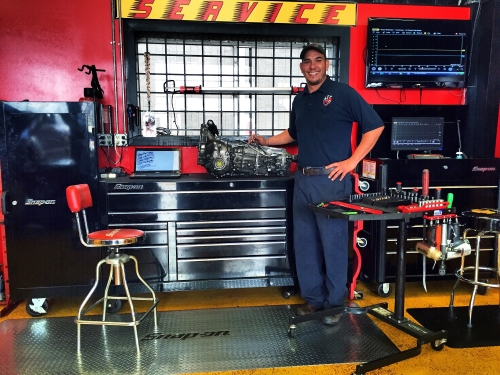
A transmission fluid leak can originate from several distinct locations including pan gaskets, axle seals, cooler lines, the torque converter seal, or internal passages. We do not recommend any repair until testing confirms the exact source and whether secondary damage has occurred from fluid loss.
Parts Commonly Replaced During Tranmission Fluid Leak Repair
The following components are replaced only after verified diagnostic confirmation of the leak source:
Transmission Pan Gasket
The pan gasket seals the fluid pan to the transmission case. A hardened or compressed gasket allows fluid to seep along the pan rail, producing a slow but consistent drip. Replacement includes a fluid and filter service.
Transmission Cooler Lines
Cooler lines carry pressurized fluid between the transmission and the cooling circuit. Cracked, corroded, or loose-fitting lines allow fluid to escape under operating pressure and can produce a significant leak during highway driving.
Front Pump Seal
The front pump seal prevents fluid loss at the torque converter interface. A failed seal allows high-pressure fluid to escape at the front of the transmission and is one of the more significant leak sources in terms of fluid loss rate.
Output Shaft or Axle Seal
Output and axle seals prevent fluid loss where rotating shafts exit the transmission housing. Worn or cracked seals allow fluid to travel along the shaft and drip from the undercarriage.
Torque Converter Seal
The torque converter seal works in conjunction with the front pump seal to contain fluid at the converter-to-transmission interface. Failure produces a leak at the front of the transmission that often saturates surrounding components.
Valve Body Gasket Set
Internal valve body gaskets and separator plates seal fluid circuits within the transmission. Failure allows fluid to migrate to external seams and is confirmed through internal inspection during a valve body service.
When A Transmission Fluid Leak Is NOT
A fluid puddle under a vehicle is often misidentified. Proper differential diagnosis separates transmission fluid from other vehicle fluids:
Engine Oil Leak
Engine oil is darker brown or black and typically accumulates under the front of the engine rather than the center or rear of the vehicle. Oil has a distinct petroleum odor and does not share the reddish color of fresh transmission fluid.
Power Steering Fluid Leak
Power steering fluid is similar in color to transmission fluid but originates from the power steering rack, pump, or hoses near the front wheels. Confirmed through source tracing and reservoir level inspection.
Coolant Leak
Engine coolant is typically green, orange, or yellow and has a sweet odor. It originates from the engine cooling system and does not share the location or appearance of a transmission fluid leak under normal conditions.
Speed or Condition-Specific Transmission Fluid Leak Severity
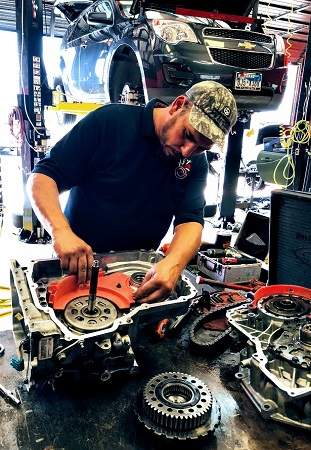
Transmission fluid leak severity and source vary depending on operating conditions, which guides the inspection approach.
- Leak Present Only After Driving: A leak that appears only after driving indicates a pressure-dependent source such as a cooler line fitting, front pump seal, or torque converter seal. These components only leak under operating pressure.
- Leak Present After Sitting Overnight: A puddle that forms while the vehicle sits points to a gravity-fed source such as a pan gasket, drain plug, or low-pressure seal that weeps when the transmission is not running.
- Leak Worsens at Highway Speed or High Temperature: Increased leak rate at highway speeds or after extended driving points to a pressure-side component such as a cooler line or front pump seal where fluid loss increases with operating pressure and temperature.
- Fluid Found on Axle or Driveshaft: Fluid appearing on the axle shaft or driveshaft points specifically to an output shaft seal or axle seal failure rather than a pan or cooler line source.
- Large Volume Loss in Short Time: Rapid fluid loss (more than a quart over a short period) indicates a high-pressure leak source such as a failed cooler line, front pump seal, or cracked transmission case requiring immediate attention.
Diagnosis requires visual tracing, UV dye testing, and pressure verification across the full transmission sealing surface.
Transmission Leak Safety Considerations
Driving with a transmission fluid leak is not safe once fluid drops below the minimum operating level. A transmission running low on fluid generates insufficient hydraulic pressure, causing clutch packs to slip, overheat, and fail rapidly. What begins as a minor leak can result in a complete transmission failure within a single highway trip if fluid loss is severe enough.
Drivers in San Antonio who notice a fluid puddle, a burning smell, or a transmission that begins to slip or hesitate should stop driving and have the vehicle inspected immediately. Do not attempt to top off fluid and continue driving without identifying the leak source, as fluid will continue to be lost and internal damage will continue to occur.
In most cases, initial leak diagnosis is completed the same day. Call our San Antonio shop to schedule a same-day inspection or bring the vehicle in and our service team will assess the leak source promptly.
How Repeat Transmission Fluid Leaks are Prevented
Long-term reliability is achieved by:
- Using OEM-specification gaskets and seals rated for transmission operating temperatures
- Torquing all pan bolts and drain plugs to manufacturer specifications to prevent over-compression or under-sealing
- Inspecting all adjacent sealing surfaces when replacing any one seal or gasket
- Pressure-testing cooler lines after any line or fitting replacement
- Performing a complete fluid level and condition check after every seal or gasket repair
- Road testing and performing a post-repair undercarriage UV inspection before vehicle return
Final verification testing confirms the leak is fully resolved before the vehicle leaves the shop.
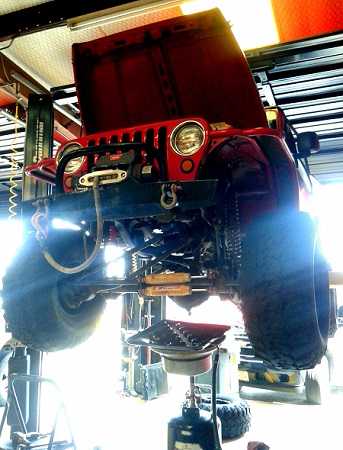
Related Transmission Symptoms
Explore other Transmission Diagnostic Support pages:
- Fluid loss directly reduces hydraulic pressure available to the clutch packs, which means an unresolved leak often produces the symptoms covered on our Transmission Slipping and Gear Slip Diagnosis page before the leak itself is ever identified.
- A transmission running low on fluid due to an undetected leak is one of the more common paths to engagement failure, which is why we recommend reviewing our Car Won’t Go Into Gear or Delays Going Into Drive page if hesitation or no-movement conditions have accompanied the leak.
- Fluid-related pressure loss can also produce the abrupt and violent shift events covered on our Transmission Bangs and Jerks When Changing Gears page, particularly when solenoid circuits are affected by contaminated or degraded fluid.
- When fluid condition deteriorates due to a slow internal leak, torque converter clutch performance is often affected first, producing the symptoms outlined on our Transmission Shudder During Acceleration page.
- Fluid leaks that affect hydraulic pressure or transmission temperature frequently trigger warning indicators covered on our Transmission Warning Light Diagnosis page, where electronic, thermal, and pressure-related fault triggers are explained in detail.
Frequently Asked Questions About Transmission Fluid Leaks
Is it safe to drive with a transmission fluid leak?
No. Once fluid drops below the minimum level, the transmission loses hydraulic pressure and internal lubrication. Continued driving risks complete transmission failure within a short period.
What does transmission fluid look like on the ground?
Fresh transmission fluid is bright red or pink. As it ages it darkens to brown or reddish-brown. It is thinner than engine oil and typically pools under the center or front of the vehicle.
Can I just add transmission fluid and keep driving?
Only as a very short-term measure to get the vehicle to a shop. Adding fluid without finding the leak source means fluid will continue to be lost, and internal damage may already be occurring.
How do I know if the leak is transmission fluid or something else?
Transmission fluid is typically red or pink and found under the center of the vehicle. Engine oil is darker and found under the front. Coolant is green, orange, or yellow and has a sweet smell. A technician can confirm the source quickly during an inspection.
Can a transmission fluid leak cause the check engine light to come on?
Yes. If fluid loss causes the transmission to slip or shift abnormally, the transmission control module will store a fault code and may illuminate the check engine or transmission warning light.
How much does it cost to fix a transmission fluid leak?
Cost depends entirely on the confirmed leak source. A pan gasket replacement differs significantly in cost from a front pump seal or cooler line repair. Accurate leak source diagnosis prevents unnecessary expense.

Have Transmission Leak Diagnostic or Repair Questions?
Call 210-495-6688 now to speak with an ASE-Certified Transmission Specialist or automotive service consultant.