
Transmission Slipping | Auto Service Experts
If your vehicle is experiencing transmission slipping, you may notice the engine revving higher than normal without the car accelerating, a delay when shifting gears, or a sudden loss of power during acceleration. Transmission slipping is one of the most common signs that your vehicle’s transmission needs immediate professional attention and is frequently reported on Ford, Chevy, Toyota, Honda, Nissan, and Dodge vehicles.
Gear slip that goes undiagnosed typically worsens and can lead to more extensive internal damage, which is why our team treats it with the same urgency applied to every case handled through our San Antonio transmission repair services. At Auto Service Experts in San Antonio, our ASE-certified technicians use structured diagnostic testing to identify the exact cause of transmission slipping before any parts are replaced.
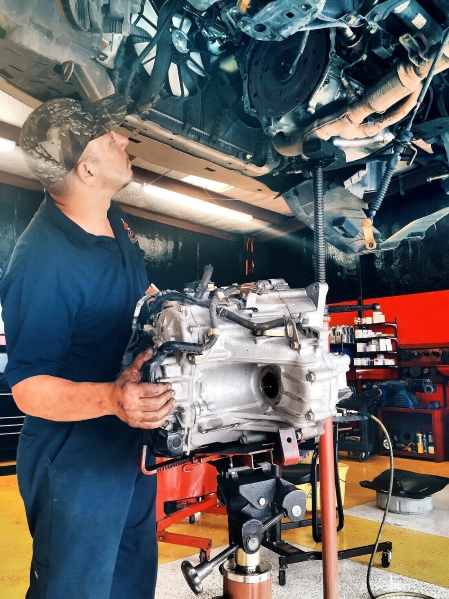
Transmission Slipping – Diagnostic Overview
This page is part of the Transmission Diagnostic Support Series at Auto Service Experts in San Antonio and is designed to answer one primary concern: if my transmission is slipping, is it safe to drive and what is causing it?
In most cases, no transmission slipping is a condition that requires prompt diagnosis. When a transmission slips, the engine revs rise without a corresponding increase in vehicle speed, or the vehicle hesitates before engaging a gear. The transmission control module may have detected a pressure, electrical, or mechanical fault that is preventing full clutch engagement during gear changes.
Diagnostic Snapshot
When a transmission slips, internal clutch packs, solenoids, or hydraulic pressure circuits are failing to maintain full gear engagement. Diagnosis begins with transmission fault code retrieval and live hydraulic pressure testing before any components are replaced.
This guide explains what slipping truly means, which internal systems are involved, and how verified diagnostic testing isolates the exact fault before any components are replaced.
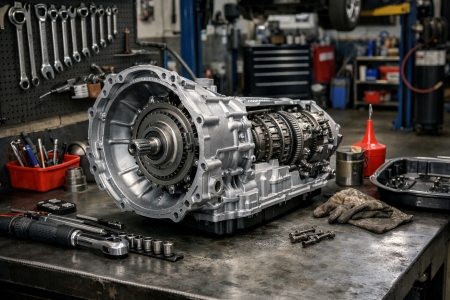
What Drivers Commonly Report When Transmission Slipping
When a transmission is slipping, drivers commonly report:
- Engine RPM rising without an increase in vehicle speed
- Hesitation or delay when accelerating from a stop
- Gear changes that feel soft, delayed, or incomplete
- A sensation of the vehicle briefly losing power mid-acceleration
- Check engine light or transmission warning light illuminated
- Burning smell in severe cases from clutch material overheating
Why Proper Transmission Slipping Diagnostics Matter
The automatic transmission is electronically and hydraulically controlled. When a slip event occurs, the transmission control module stores a diagnostic trouble code and may adapt shift parameters to compensate. Without structured testing, it is common to assume low fluid or a failed solenoid when the actual root cause may involve internal clutch wear, valve body faults, pressure circuit failure, or a torque converter malfunction.
Diagnostics at Auto Service Experts, proper transmission evaluation includes fault code retrieval, live hydraulic pressure testing, solenoid circuit verification, and fluid condition analysis. Accurate diagnosis prevents unnecessary parts replacement and ensures system reliability.
Common Verified Causes of Transmission Slipping
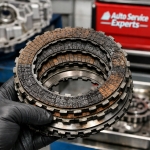
Worn or Burned Clutch Packs
Internal clutch friction material degrades over time or from overheating. Confirmed through hydraulic pressure testing and internal inspection.
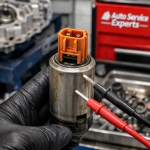
Faulty Shift Solenoid
A failed solenoid cannot regulate hydraulic pressure to the correct gear circuit. Verified through solenoid resistance testing and live scan data.
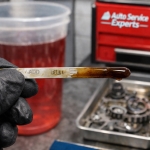
Low or Contaminated Transmission Fluid
Insufficient or degraded fluid reduces hydraulic pressure required for clutch engagement. Confirmed through fluid level inspection and fluid condition analysis.
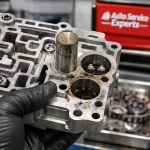
Valve Body Malfunction
Internal valve body bores and check balls regulate fluid pressure routing. Wear or debris contamination disrupts pressure delivery. Verified through hydraulic pressure testing at multiple circuits.
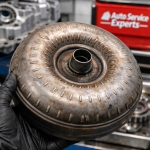
Torque Converter Failure
A failing torque converter clutch can cause slip sensations at highway speeds or during lockup engagement. Confirmed through stall speed testing and live torque converter data.
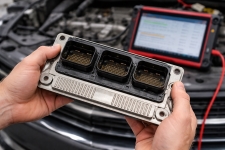
Transmission Control Module Fault
Internal module errors or corrupted adaptive shift data can cause incorrect solenoid commands and slip behavior. Confirmed through module scan and communication verification.
Professional Diagnostic Process
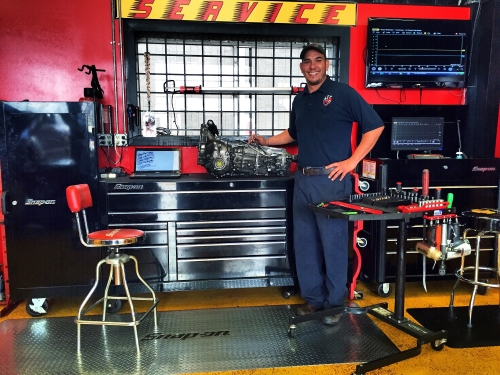
Our ASE CodeLogic diagnostic workflow includes:
Verified Transmission Slipping Diagnostic Protocol
- Verify customer concern and transmission symptom behavior
- Retrieve stored and pending transmission fault codes
- Record freeze-frame and adaptive shift data
- Perform live hydraulic line pressure test at idle and stall
- Monitor solenoid command and response data during road test
- Inspect transmission fluid level, color, and odor
- Perform solenoid resistance and circuit integrity testing
- Execute bidirectional solenoid functional test via scan tool
- Confirm repair with final road test and transmission system scan
This structured approach ensures verified root cause correction.
Parts Commonly Replaced During Transmission Slipping Repair
The following components are replaced only after verified diagnostic confirmation:
Shift Solenoid or Solenoid Pack
Shift solenoids regulate hydraulic fluid flow to engage specific gear circuits. A failed solenoid disrupts pressure delivery and causes gear slip or delayed engagement.
Clutch Pack Assembly
Clutch packs use friction discs to mechanically lock gear sets during engagement. Worn or burned friction material prevents full clutch application and causes slipping under load.
Valve Body
The valve body routes hydraulic pressure to the correct clutch circuits based on solenoid commands. Internal wear, stuck valves, or debris contamination causes pressure loss and slip conditions.
Torque Converter
The torque converter transfers engine power to the transmission and locks up at highway speeds. Internal clutch failure causes slip sensations during acceleration or at cruising speed.
Transmission Fluid and Filter
Degraded or low fluid reduces hydraulic pressure throughout the transmission. A restricted filter compounds pressure loss and accelerates clutch and solenoid wear.
Transmission Control Module
The transmission control module commands all solenoid activity and shift scheduling. Internal faults or corrupted adaptive data can produce incorrect clutch engagement and slip events.
What the Transmission Slipping Is NOT
Transmission slipping is often mistaken for other conditions. Proper differential diagnosis separates it from:
Engine Misfire
An engine misfire causes RPM fluctuation and hesitation that can feel similar to a transmission slip. Misfire codes and ignition system testing differentiate this condition.
Throttle Body or Acceleration Sensor Fault
A faulty throttle position sensor can cause hesitation during acceleration without any transmission fault present. Confirmed through live throttle data comparison.
Driveshaft or Axle Vibration
Worn driveshaft U-joints or CV axles can create power delivery sensations mistaken for slipping. Mechanical inspection confirms this condition separately from transmission testing.
Speed or Condition-Specific Transmission Slipping Diagnostics in San Antonio
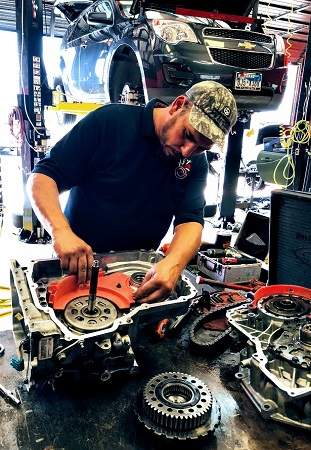
Transmission slip behavior varies depending on speed, load, and operating temperature, which guides the diagnostic approach.
- Cold Start or First Gear Engagement – Slip during initial engagement from park or neutral often points to low fluid pressure or a worn forward clutch pack.
- Highway Cruising Speed – Slip or shudder at highway speeds typically indicates torque converter clutch failure or a lockup solenoid fault.
- Under Heavy Acceleration Load – Slip under hard acceleration points to clutch pack wear or insufficient hydraulic pressure under high-load conditions.
- Warm Operating Temperature – Slip that worsens as the transmission reaches operating temperature suggests fluid breakdown, seal degradation, or thermal expansion affecting clutch clearances.
- Specific Gear Changes Only – Slip isolated to one gear change (e.g., 2-3 shift) typically indicates a solenoid, clutch pack, or valve body circuit specific to that gear.
Diagnosis requires live hydraulic pressure data, solenoid command monitoring, and road-load testing across multiple operating conditions.
Related Transmission System Resource
This symptom page connects directly to our comprehensive Transmission System Authority Hub, where full system operation, fluid service intervals, and component interaction are explained in detail. Because transmission slipping stems from hydraulic pressure loss or internal mechanical wear, our diagnostic testing process provides accurate subsystem verification before any internal work is performed.
In many cases, transmission concerns are accompanied by related drivetrain symptoms, which is why inspection may extend into related components within our drivetrain and driveshaft service area. This layered diagnostic structure ensures complete system evaluation rather than isolated part replacement.
Safety Considerations
With a slipping transmission, the vehicle may feel unpredictable during acceleration and gear changes. Unlike an ABS fault, transmission slipping directly affects the vehicle’s ability to deliver power safely and consistently.
Continued driving with a slipping transmission accelerates internal wear and may result in complete gear failure or transmission damage. Reduced control may be noticeable during highway merging, hill climbing, or emergency acceleration situations.
Timely diagnosis at our San Antonio shop prevents further internal damage and restores full transmission function.
How Repeat Transmission Failures Are Prevented
Long-term reliability is achieved by:
- Performing transmission fluid and filter service at manufacturer-specified intervals
- Verifying correct fluid type and level after any repair
- Clearing adaptive shift data and allowing relearn after solenoid or valve body service
- Inspecting wiring harness routing and connector integrity at reassembly
- Updating transmission control module software when applicable
- Performing a complete road test across all gear ranges before vehicle return
Final verification testing helps prevent repeat failures.
Related Transmission Symptoms
Explore other Transmission Diagnostic Support pages:
- When gear slip is accompanied by a sudden jolt or bang during gear changes, the concern may involve pressure control solenoid faults or valve body wear affecting both hold and apply pressure. See our Transmission Jerks and Bangs When Shifting page for a full diagnostic breakdown of harsh shift events.
- Gear slip under light acceleration can be difficult to distinguish from torque converter clutch shudder, as both conditions produce a loss of drive feel and RPM irregularity during the same driving conditions. If the symptom feels more like a rhythmic vibration or flutter than a clean slip, our Transmission Shudder and Torque Converter Clutch Diagnosis page covers the specific conditions behind that presentation.
- Gear slip under acceleration and delayed engagement often share the same hydraulic root cause. If your vehicle hesitates before moving or struggles to engage Drive or Reverse, see our Transmission Delayed or Won’t Go Into Gear page for a complete breakdown of engagement-related faults.
- When gear slip progresses to the point where the transmission can no longer transfer engine power to the wheels, the condition moves beyond slipping into the complete drive loss covered on our Car Revs but Won’t Move page, where torque converter failure and total clutch pack failure are evaluated through structured diagnostic testing.
- Transmission slip events are frequently logged as fault codes by the transmission control module, and in many cases the warning indicator activates as clutch pack wear or pressure loss reaches a threshold the system can measure. Our Transmission Warning Light and Control Module Fault Analysis page explains how stored codes relate to the slipping condition and what the diagnostic process looks like from that starting point.
- Hydraulic pressure loss caused by a slow or intermittent fluid leak is one of the less obvious causes of gear slip, particularly when the fluid level has not dropped far enough to trigger a warning but has fallen below the level required for full clutch pack apply pressure. If a fluid puddle or low fluid condition has been identified alongside the slipping symptom, our Transmission Fluid Leak Location and Repair page outlines how leak sources are identified and how fluid loss affects overall transmission performance.
Frequently Asked Questions About Transmission Slipping Issues
Is it safe to drive with a slipping transmission?
No. Transmission slipping affects power delivery and can worsen rapidly. Continued driving risks complete gear failure and additional internal damage.
Will adding transmission fluid fix the slipping?
Only if low fluid is the confirmed root cause. Adding fluid without diagnosis may mask the underlying fault and delay proper repair.
Can a slipping transmission be repaired without a full rebuild?
Yes, in many cases. Solenoid replacement, valve body service, or a fluid flush may resolve the issue if internal clutch wear is not the confirmed cause.
What does transmission slipping feel like at highway speed?
At highway speeds, slipping often presents as a shudder or brief RPM surge during torque converter lockup, rather than a full gear slip.
Will clearing the code stop the transmission slipping?
No. Clearing fault codes without correcting the root cause will result in the symptom returning and may allow further internal damage.
How much does transmission slipping repair cost?
Cost depends entirely on the verified root cause. Solenoid replacement differs significantly in cost from clutch pack or valve body repair. Accurate diagnosis prevents unnecessary expense.
Have Transmission Repair Questions?
Call 210-495-6688 now to speak with an ASE-Certified Transmission specialist or automotive service consultant.