
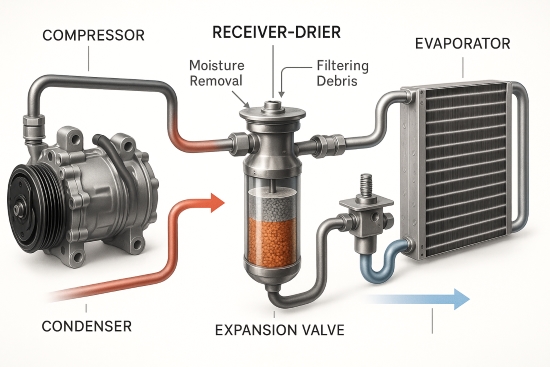
A vehicle’s air conditioning system relies on multiple components working together to control heat, pressure, and airflow. When one part fails to do it’s job, cooling performance is reduced. For San Antonio drivers who depend on reliable AC during long summers, understanding how these components function helps identify problems early and supports smarter repair decisions.
At Auto Service Experts in North Central San Antonio, our ASE Master Technicians diagnose AC systems by measuring refrigerant pressures, temperature differentials, and electrical command signals rather than guessing or simply adding refrigerant.
Modern automotive air conditioning systems are carefully balanced systems. Flow of refrigerant, pressure, and temperature changes must be kept within specific ranges for proper functioning. When symptoms such as reduced airflow, warm air, or inconsistent cooling appear, we can often trace the cause to one or more components that are no longer operating as intended. In our San Antonio shop, we often see repeat AC failures caused by incomplete repairs that add only refrigerant without addressing the underlying component issue.
Car AC components explained makes it easier to understand how components work together, what each component’s role is in cooling, and why proper diagnosis prevents repeat repairs in San Antonio driving conditions.
How the Car AC System Circulates Refrigerant and Heat
The car AC system is a closed-loop design. Its main function is to move heat out of the cabin and release it outside the vehicle. This process depends on controlled refrigerant flow and pressure changes across multiple components.
The refrigerant begins its cycle inside the evaporator, where it absorbs heat from the cabin air. As air passes over the evaporator core, the refrigerant changes state and pulls heat from the interior. This cooled air is then circulated through the vents.
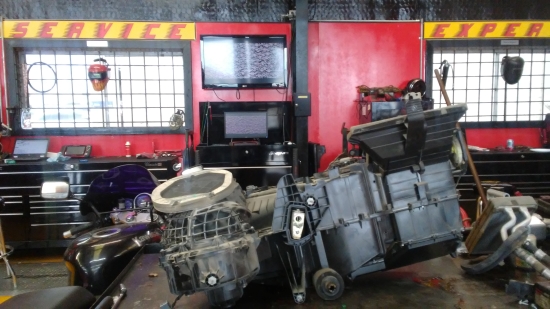
The refrigerant moves to the compressor, which raises pressure and temperature. From there, it travels to the condenser at the front of the vehicle. As the air flows across the condenser, heat is removed. This allows the refrigerant to cool before it flows back through the system.
An expansion device, such as an orifice tube or expansion valve, regulates refrigerant flow back to the evaporator. This pressure drop allows the refrigerant to absorb heat again, continuing the cycle.
Every step depends on proper component performance. Malfunctions that restrict airflow or cause significant increases or decreases in pressure strain the system and prevent it from cooling properly. During an AC performance evaluation at Auto Service Experts, we verify high-side and low-side pressure readings, monitor vent temperature drop, and confirm proper refrigerant cycling to ensure the system is operating within manufacturer specifications.
The Compressor and Accumulator System Working Together
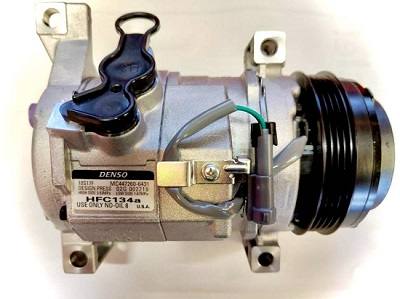
The compressor provides the driving force for refrigerant movement. It circulates refrigerant through the entire AC system while maintaining the pressure difference between the high and low sides. Without consistent compressor operation, cooling cannot occur.
The accumulator system works alongside the compressor on the low-pressure side. Its role is to manage refrigerant returning from the evaporator by separating vapor from liquid. Only refrigerant vapor should return to the compressor. Liquid entering the compressor can cause damage.
The accumulator also contains desiccant material that absorbs moisture from the refrigerant. Moisture inside the system can corrode internal components and reduce cooling efficiency.
Inconsistent cooling, rapid cycling, or unusual noises are often signs of issues with the compressor or accumulator. Pressure readings outside normal ranges may indicate a restriction of refrigerant flow or internal contamination.
Proper diagnosis involves testing both mechanical and pressure behavior to confirm whether the issue lies with the compressor, accumulator system, or another related component. Our technicians also evaluate compressor clutch engagement, command signals, and system load response to prevent unnecessary compressor replacement when the root cause is electrical or airflow-related.
Receiver-Drier System and Moisture Control
Some vehicle designs use a receiver-drier system instead of an accumulator. This component serves a similar purpose but is located on the high-pressure side of the system.
The receiver-drier filters debris and absorbs moisture before refrigerant reaches the expansion device. Moisture control is necessary because refrigerant mixed with water can form acids that damage seals, hoses, and internal surfaces.
A restricted or saturated receiver-drier can disrupt refrigerant flow and reduce cooling performance. Pressure readings may appear abnormal, and cooling may feel inconsistent.
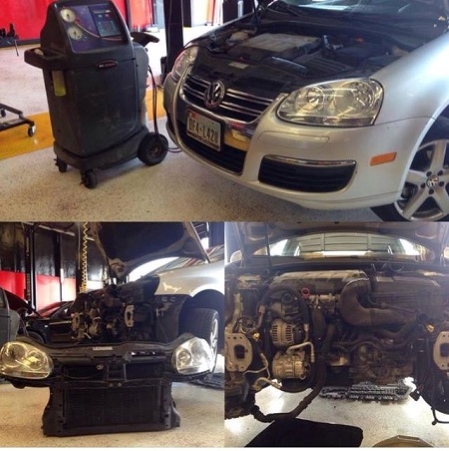
Because receiver-drier issues often mimic low refrigerant symptoms, accurate diagnosis is important. Simply adding refrigerant without addressing moisture or contamination can lead to repeat failures. Refrigerant handling requires EPA Section 609 certification; proper recovery and evacuation procedures are critical to protect both the system and the environment.
In San Antonio’s heat, moisture control is more important due to frequent AC use. Ensuring the receiver-drier system functions properly supports long-term reliability.
Condenser Fan Operation and Heat Release
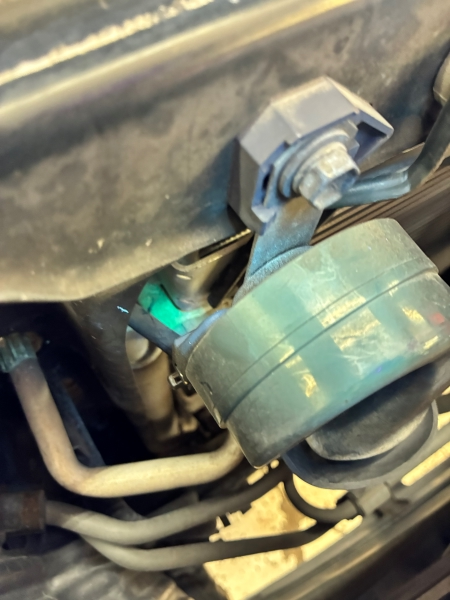
The condenser fan helps regulate temperature and pressure by pulling air across the condenser. This airflow allows refrigerant to release heat before it returns to the low-pressure side of the system.
When the condenser fan fails or operates inconsistently, refrigerant cannot cool properly. This causes high pressure on the condenser side, reducing overall system efficiency.
Drivers may notice AC performance drops while idling or in traffic, but it improves at highway speeds. These symptoms indicate problems with airflow, not with refrigerant quantity.
Electrical controls govern condenser fan operation. Faulty relays, sensors, or wiring can prevent the fan from engaging when needed.
Testing fan operation is part of a complete AC diagnosis. Restoring proper airflow helps stabilize pressures and improves cooling consistency during stop-and-go driving common in San Antonio. This is especially important during peak summer temperatures when ambient heat can push AC systems to their maximum operating limits.
Why System-Wide Diagnosis Supports Reliable AC Repairs
Car AC components work as an interconnected system rather than independent parts. Focusing on only one area often leads to partial repairs that do not last.
Our system-wide diagnostic process includes checking refrigerant flow, pressure readings, airflow, and electrical operation together. A methodical approach identifies the source of symptoms instead of just treating surface issues. At Auto Service Experts, we handle AC repairs as a complete system evaluation rather than a single-part replacement in order to ensure long-term reliability.
Drivers benefit from clear explanations that connect symptoms to specific components. Understanding why a repair is recommended builds confidence and prevents unnecessary part replacement.
For San Antonio drivers, dependable AC performance affects daily comfort and even safety. Schedule service when early symptoms appear. This allows technicians to address concerns before they lead to larger failures. Our goal is not just to restore cooling temporarily, but to deliver dependable air conditioning performance that holds up through multiple South Texas summers.
If your vehicle shows signs of weak cooling, unusual noise, or inconsistent airflow, a professional inspection can determine which components need attention. Working with technicians who focus on accurate diagnosis helps restore comfort and maintain long-term system performance.
Schedule a professional AC inspection at Auto Service Experts in San Antonio today. Our ASE Master Technicians will identify the root cause, explain your options clearly, and help restore long-term system performance you can rely on.